

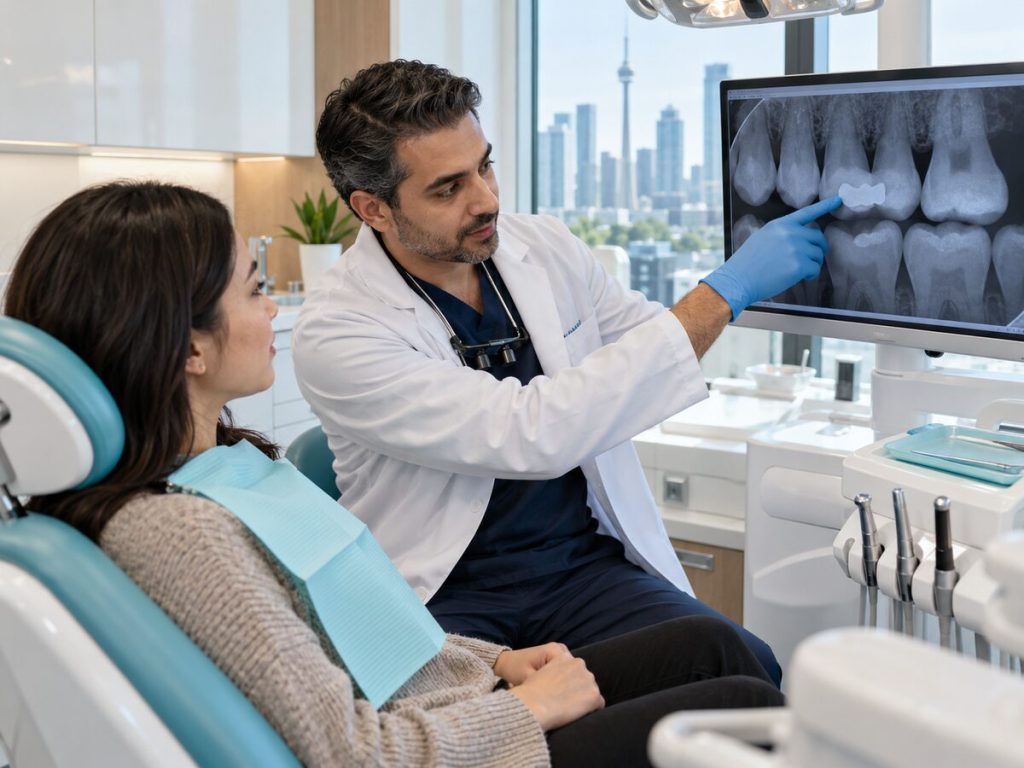
Some sensitivity after a dental filling can be temporary, especially to cold, heat, or pressure, but the pattern of the pain matters. Mild sensitivity that gradually improves may settle over days to weeks. Pain that is severe, worsening, triggered by biting, lingers after hot or cold, or is accompanied by swelling should be checked by a dentist because the filling or the tooth may need further assessment.
Call your dentist sooner if: the tooth hurts sharply when you bite, the bite feels different from before the filling, pain is getting worse instead of better, sensitivity lingers after hot or cold, or you develop swelling, drainage, fever, or a bad taste. If swelling interferes with breathing or swallowing, call 911 or go to the nearest emergency department.
Is Tooth Pain After a Filling Normal?
Temporary sensitivity can happen after a filling because the tooth and pulp may be irritated by the dental work. HealthLink BC notes that a filled tooth may be sensitive to heat and cold for days to weeks, while the American Association of Endodontists explains that recent dental treatment can temporarily inflame the pulp.
What matters most is whether the discomfort is mild and improving or whether it is persistent, severe, or changing. A tooth that becomes more painful, hurts when you chew, or develops swelling needs a dental assessment rather than more waiting.
| What you notice | What it may mean | What to do |
|---|---|---|
| Mild cold or heat sensitivity that is gradually improving | Temporary irritation after treatment may be involved. | Monitor it and follow the aftercare instructions you were given. |
| Sharp pain when biting or chewing | A loose restoration, crack, decay, or pulp problem may need to be ruled out. | Arrange a dental assessment. |
| The filled tooth feels like it contacts before the other teeth | The bite or restoration may need to be checked. | Contact the dental office rather than trying to adjust it yourself. |
| Lingering pain after hot or cold | The pulp may be more significantly inflamed or damaged. | Contact a dentist promptly. |
| Swelling, drainage, fever, or a bad taste | An infection may be present. | Seek prompt dental care; breathing or swallowing difficulty requires emergency medical care. |
Why Can a Tooth Hurt After a Filling?
There is more than one possible reason. Some causes are minor and temporary, while others need treatment. The dentist has to consider the type of pain, how long it lasts, whether the tooth hurts when you bite, how deep the original cavity was, and whether the restoration and surrounding tooth are intact.
1. Temporary Pulp Irritation
The pulp is the soft tissue inside the tooth that contains nerves and blood vessels. Dental treatment can temporarily irritate this tissue, especially when a cavity was deep or the tooth required more extensive preparation. This can cause short-lived sensitivity to temperature or pressure.
Mild sensitivity that steadily improves is different from pain that becomes stronger, starts occurring without a trigger, or lingers for a long time after hot or cold. Those changes are reasons to have the tooth re-evaluated.
2. The Filling or Bite Needs to Be Checked
If the filled tooth feels different when you close your teeth together, or if it is the first tooth to contact when you bite, tell your dentist. The restoration and bite can be checked to see whether an adjustment or another correction is appropriate.
Do not file, grind, or reshape a filling yourself. A dentist should examine the restoration and tooth before any adjustment is made.
3. A Crack or Problem in the Tooth
Sharp pain when biting can sometimes be associated with a crack, decay, a loose restoration, or damage to the pulp tissue. Cracks are not always visible without an examination, and the pain may come and go.
If chewing on the filled tooth repeatedly causes a sharp sensation, avoid heavy chewing on that side and arrange an assessment. Learn more about broken and cracked tooth repair.
4. The Pulp Is More Deeply Inflamed
A deep cavity can place the pulp under greater stress. In some teeth, inflammation can become irreversible or infection can develop. Warning signs can include severe pain while chewing or biting, spontaneous pain, lingering sensitivity to hot or cold, swelling, or a pimple-like bump on the gum.
If the pulp cannot recover, root canal treatment may be considered when the tooth can still be restored. A root canal is not required simply because a tooth is sensitive after a filling; the diagnosis depends on the examination and testing.
For more information, see our root canal treatment in North York page.
5. Decay or a Failing Restoration
Fillings can wear, loosen, crack, or develop decay around their edges over time. The Canadian Dental Association recommends having loose or broken fillings checked and notes that dentists may use X-rays when needed to assess areas that are difficult to see directly.
If an older filling has recently become painful, sensitive, or uncomfortable when you chew, the problem may not be the filling material itself. The tooth and restoration both need to be examined.
How Long Can Sensitivity Last After a Filling?
There is no single recovery time that applies to every filling. HealthLink BC says a filled tooth may be sensitive to heat and cold for days to weeks. The American Association of Endodontists notes that sensitivity after recent dental treatment can sometimes settle over a few weeks.
The trend is more useful than the calendar. Mild sensitivity that is becoming less noticeable is different from pain that is becoming stronger, more frequent, spontaneous, or difficult to manage. Contact your dentist if you are unsure whether your symptoms are following the expected course for your tooth.
What If the Tooth Hurts When You Bite After a Filling?
Biting pain deserves attention because it can have several causes. The AAE lists decay, a loose filling, a cracked tooth, and pulp damage among possible explanations for sharp pain when biting down.
If the pain happens every time you chew, if you avoid that side of your mouth, or if the tooth feels noticeably different from the surrounding teeth, contact your dentist. The dentist can check the filling, the tooth, and the way your teeth meet.
What Can You Do Until the Tooth Is Checked?
If the discomfort is mild and you are waiting for a follow-up appointment, protect the tooth and avoid making the area more sensitive:
- avoid very hard, sticky, extremely hot, or very cold foods if they trigger pain;
- chew on the opposite side if pressure makes the tooth hurt;
- continue gentle brushing and flossing around the filled tooth;
- use toothpaste designed for sensitive teeth if your dentist or pharmacist says it is appropriate for you;
- if you use an over-the-counter pain medicine, use only one that is safe for you and follow the label or your pharmacist’s advice; and
- do not place aspirin, pain-relief tablets, essential oils, or other chemicals directly on the tooth or gum.
These steps may reduce irritation, but they do not correct a cracked tooth, loose filling, infection, or another structural problem.
When Should You Call the Dentist?
Contact your dentist when:
- pain is severe, worsening, or preventing you from chewing normally;
- the tooth hurts sharply when you bite or release pressure;
- the bite feels different after the filling;
- sensitivity is persistent or not improving as expected;
- pain lingers after hot or cold;
- the filling feels loose, cracked, or broken;
- you develop swelling, drainage, fever, or a bad taste; or
- pain returns after the tooth had initially felt better.
If you develop rapidly worsening facial or neck swelling, difficulty breathing or swallowing, uncontrolled heavy bleeding, or serious facial trauma, call 911 or go to the nearest emergency department.
For urgent dental concerns, visit our emergency dentist in North York page.
Could the Filling Need to Be Replaced?
Sometimes. A dentist may recommend repair or replacement if the restoration is loose, broken, leaking, worn, or affected by recurrent decay. In other cases the filling may be intact and the source of pain may be a crack, pulp inflammation, or another dental problem.
The treatment decision should be based on the condition of the tooth and restoration, not simply on how old the filling is. If you want to understand the available materials, see our guide to types of cavity fillings.
Pain or Sensitivity After a Filling?
Smile Avenue Dentistry can examine the filled tooth, check the restoration and bite, and explain whether the symptoms are consistent with temporary sensitivity or need further treatment. Appointment availability must be confirmed.
Questions About Pain After a Dental Filling
Is sensitivity after a filling normal?
Some temporary sensitivity can occur after a filling, particularly to temperature or pressure. Mild symptoms that gradually improve may settle over days to weeks. Persistent, severe, or worsening pain should be assessed.
Why does my filling hurt when I bite?
Sharp biting pain can be associated with a loose restoration, crack, decay, or pulp problem. If the tooth repeatedly hurts during chewing, a dentist should examine the restoration, tooth, and bite.
Does pain after a filling mean I need a root canal?
No. Temporary sensitivity does not automatically mean root canal treatment is needed. Root canal treatment is considered when the pulp is irreversibly inflamed or infected and the tooth can still be restored. Diagnosis requires an examination and appropriate testing.
Can an old filling suddenly start hurting?
Yes. Older restorations can loosen, crack, wear, or develop recurrent decay around their edges, and the tooth itself can develop a crack or pulp problem. New pain around an older filling should be evaluated.
When is pain after a filling an emergency?
Severe dental pain, significant swelling, drainage, or fever needs prompt dental assessment. Difficulty breathing or swallowing, rapidly worsening facial or neck swelling, uncontrolled heavy bleeding, or serious facial trauma requires emergency medical care.
References & Sources
- American Association of Endodontists: Tooth Pain
- HealthLink BC: Dental Fillings (Restorations)
- Canadian Dental Association: Fillings
- Canadian Dental Association: Cavities
- American Association of Endodontists: What Is a Root Canal?
Medical disclaimer: This article provides general oral health information and is not a diagnosis or a substitute for an examination by a dental professional.