
Keeping a damaged tooth or replacing it? If you are weighing crown vs implant in North York, you are usually deciding between two different situations: a tooth that can still be saved with a crown, and a tooth that is missing or cannot be saved and needs a full replacement. This guide explains how each option works, how long each is reported to last, what care each needs, and who each option does and does not suit — so you can have a clearer conversation at your assessment.
- What each option is
- Crown vs implant: side-by-side comparison
- How to choose
- Frequently Asked Questions
What each option is
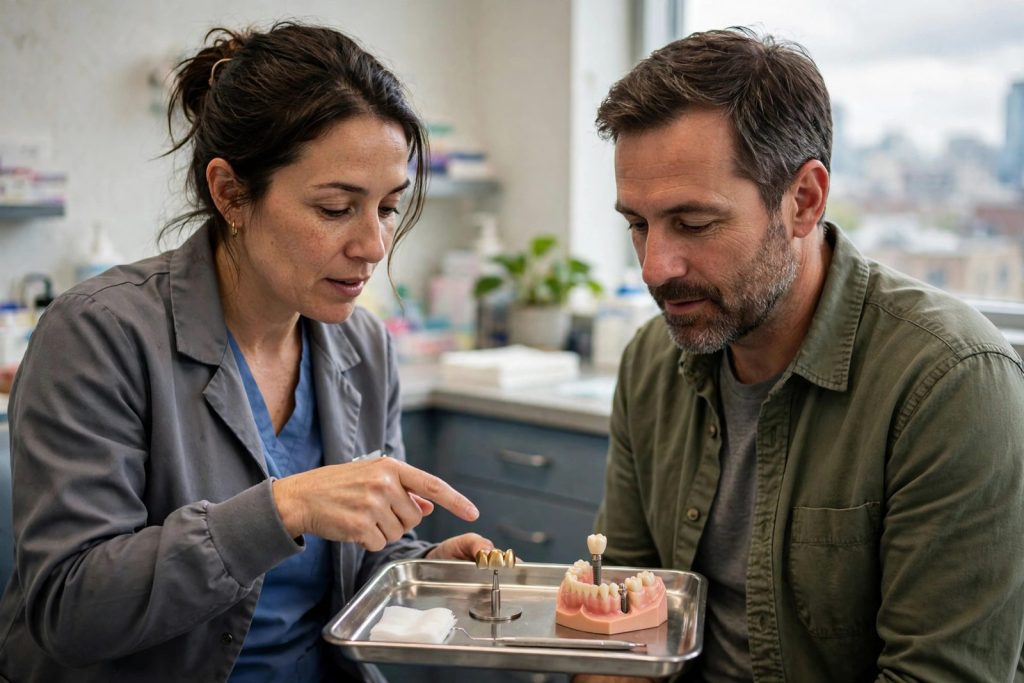
A dental crown is a cap placed over your own tooth after the tooth has been shaped and any decay or damaged structure has been removed. Your natural root stays in place. A dental implant is different: it replaces the whole tooth, including the root. A small titanium post is placed in the jawbone, and once it has integrated with the bone, a crown is attached on top of it. You can read more about how replacement works on our dental implants service page for North York patients. General information about oral health care in Ontario is also available from the Ontario Dental Association.
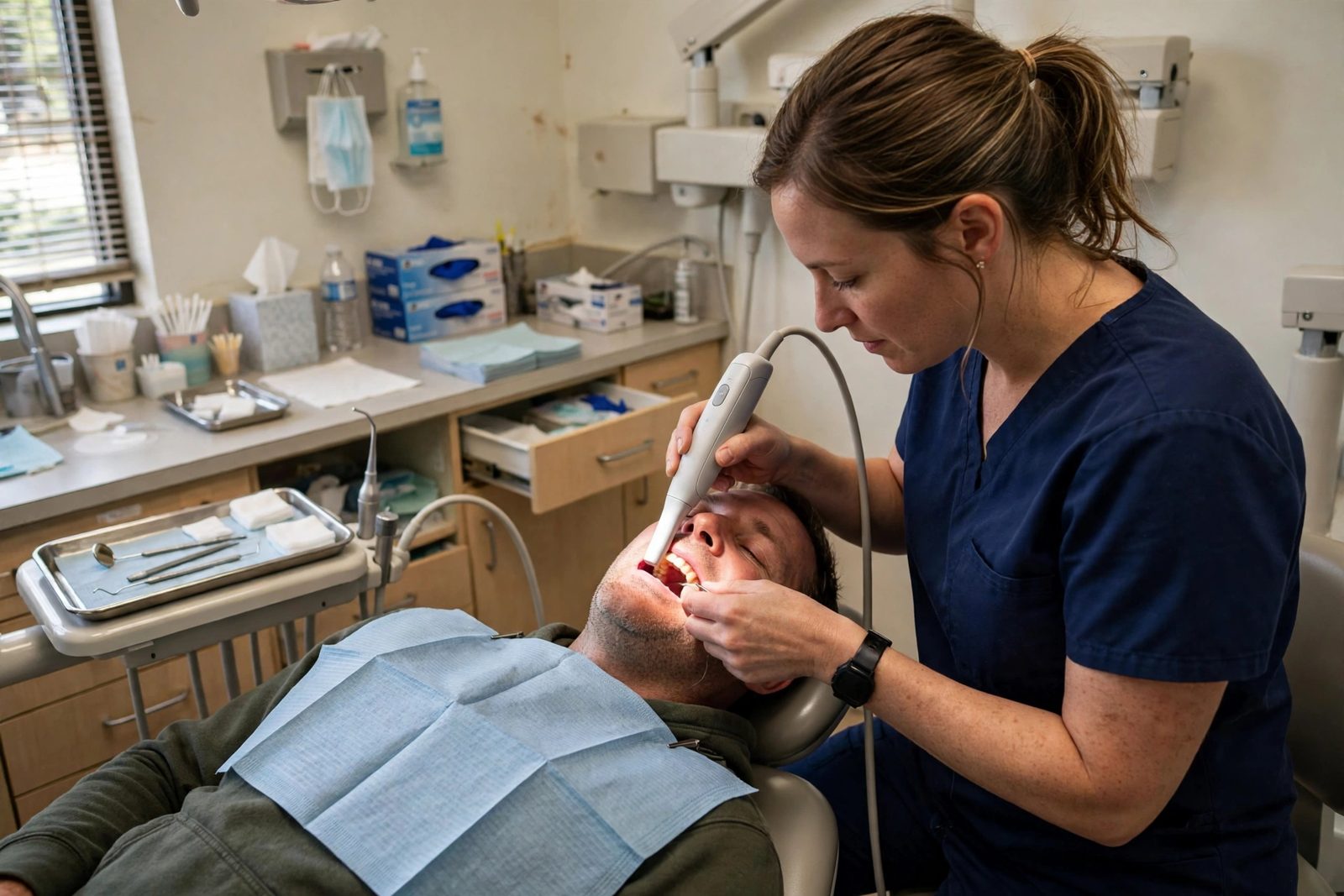
At Smile Avenue Dentistry, digital scanning with our iTero scanner may be used as part of planning and impressions, depending on your case. Not every damaged tooth can be crowned, and not every missing tooth site is ready for an implant without further assessment — bone volume, gum health, bite forces and your medical history all matter.
Crown vs implant: side-by-side comparison
| Factor | Dental crown (on your own tooth) | Dental implant (full replacement) |
|---|---|---|
| What it is / how it works | A custom cap cemented over a prepared natural tooth. The natural root remains and continues to support the tooth. | A titanium post placed in the jawbone acts as an artificial root. After healing and integration with the bone, an abutment and crown are attached. |
| Typical lifespan | Pjetursson et al. (2015, Journal of Dentistry systematic review of tooth-supported single crowns) reported an estimated 5-year survival of about 95.7% for metal-ceramic crowns and about 96.6% for glass-infiltrated alumina crowns — survival meaning the crown remained in place, not that no repairs were ever needed. | Jung et al. (2012, Clinical Oral Implants Research systematic review of single crowns on implants) reported implant survival of 97.2% at 5 years and 93.2% at 10 years, and crown survival of 96.3% at 5 years and 89.4% at 10 years — survival of the implant and its crown are measured separately. |
| Maintenance and care | Brush and clean around the crown margin daily, including interdental cleaning. The underlying tooth can still develop decay at the margin, so regular checkups and X-rays as advised are important. | Brush and clean around the implant crown daily, including interdental cleaning designed for implants. Regular professional monitoring is important because gum inflammation around an implant (peri-implant disease) can develop without obvious symptoms at first. |
| Effect on neighbouring teeth and jawbone | The tooth being crowned is reshaped. Neighbouring teeth are not usually prepared. The natural root continues to transfer biting forces to the jawbone. | Neighbouring teeth do not need to be reshaped to support the implant. The implant post transfers biting forces to the jawbone at that site, which helps maintain bone stimulation where the tooth was lost, although bone changes can still occur. |
| Who it suits and who it does not | May suit a tooth with enough healthy structure and a healthy root that can be restored. It does not suit a tooth that is cracked into the root, severely decayed below the gumline, or otherwise not restorable. | May suit a missing tooth, or a tooth that cannot be saved, where there is adequate bone and gum health and medical factors allow surgery. It may not suit uncontrolled medical conditions, heavy smoking without a plan to reduce risk, or sites with insufficient bone unless further procedures are discussed and accepted. |
| Number of visits and treatment timeline | Often two visits over a few weeks: preparation and a temporary crown, then fitting of the final crown once the laboratory has made it. Timelines vary by case. | Usually several visits over several months: assessment and planning, implant placement, a healing period for integration, then abutment and crown fitting. Timelines vary and can be longer if bone or gum treatment is needed first. |
| CDCP coverage | Coverage for crowns under the Canadian Dental Care Plan depends on eligibility and preauthorization, and not every case is approved. Dental implants are NOT covered by the CDCP. | Dental implants are NOT covered by the Canadian Dental Care Plan. |
Factors that affect cost include the number of teeth involved, laboratory work, whether additional treatment such as root canal therapy, bone grafting or gum treatment is needed, and the materials chosen. Because of this, cost is discussed after an in-person assessment rather than quoted in general terms here.
How to choose
Start with one question: can the natural tooth be saved predictably? If the tooth has a healthy root and enough remaining structure, a crown often preserves what you already have. If the tooth is missing, or it cannot be restored in a predictable way, an implant replaces the full tooth without relying on neighbouring teeth for support. Your dentist will assess the tooth, gums, bone and bite, explain the limitations of each option in your case, and discuss what happens if you delay treatment. There is no single right answer for every patient, and a second discussion after you have seen your X-rays and scan results is reasonable.
Frequently Asked Questions
Can a crown be placed on any damaged tooth?
No. A crown needs enough healthy tooth structure and a sound root to support it. Teeth cracked into the root, or decayed extensively below the gumline, may not be restorable and may need a different plan.
Does getting an implant hurt?
Treatment is planned with local anaesthesia and post-care instructions. Experiences vary, and discomfort after surgery is managed as advised by your dentist. No treatment can be described as completely free of discomfort for every patient.
How long does implant treatment take from start to finish?
It usually takes several months because the implant needs a healing period to integrate with the bone before the final crown is fitted. Your timeline will be confirmed after assessment, imaging and planning.
Can an implant fail?
Yes, implants can fail, for example if integration does not occur or if peri-implant disease develops later. Smoking, uncontrolled diabetes and poor plaque control increase risk. Your dentist will discuss your individual risk factors.
Will a crown look like my other teeth?
Crowns are made to match the shape and shade of surrounding teeth as closely as materials allow. Exact matching can be more difficult for a single front tooth, and your dentist will explain what to expect.
What happens if I do nothing about a missing tooth?
Neighbouring teeth may drift, opposing teeth may over-erupt, chewing may shift to the other side, and bone at the empty site gradually reduces over time. Your dentist can explain which of these apply in your case.
Does insurance help with crowns or implants?
Coverage varies by plan. Smile Avenue Dentistry works with many major insurance plans, and the team can help you check what your own plan includes before treatment begins. Under the CDCP, dental implants are not covered, and crown coverage depends on eligibility and preauthorization.
Am I too old for an implant?
Age alone is usually not the deciding factor. Overall health, bone volume, gum health, medications and healing capacity matter more, and these are assessed individually.
Still deciding between a crown and an implant? Book an assessment at Smile Avenue Dentistry in North York — the clinic is open Sunday and closed Saturday — by calling (416) 250-5354. The team will examine the tooth or gap, explain your options and their limitations, and help you choose the plan that fits your case.