

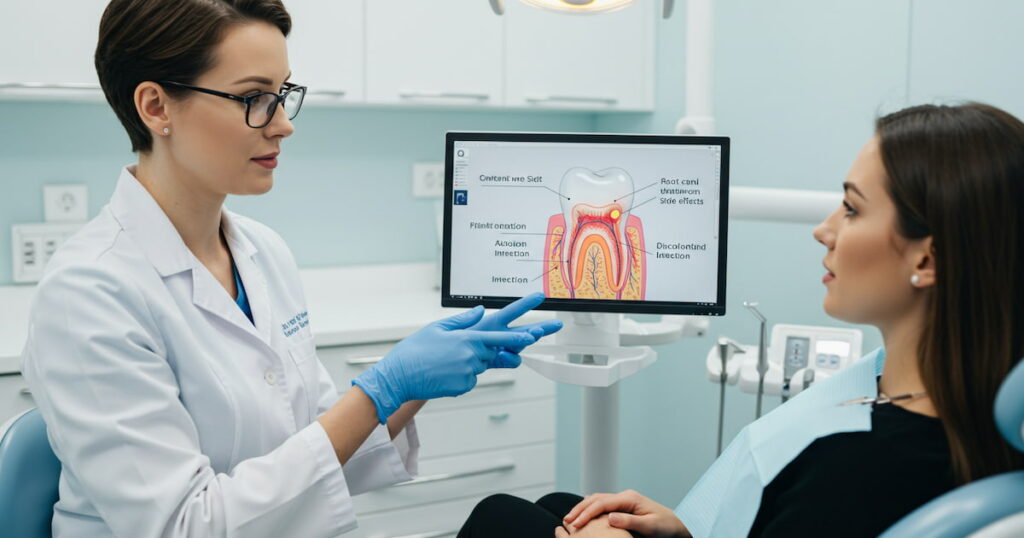
After a root canal, mild tenderness or sensitivity when biting can happen for a few days as the tissues around the treated tooth settle. Severe or increasing pain, visible swelling, a bite that feels uneven, a temporary restoration that comes out, or the return of symptoms you had before treatment should be checked by a dentist.
Most post-treatment discomfort improves rather than gets worse. This guide explains which root canal treatment side effects can occur during normal recovery, what may develop later, which complications need attention, and when to contact your dentist. If you recently had root canal therapy, follow the specific aftercare instructions given by your dentist because your tooth and treatment plan may differ from someone else’s.
A useful way to think about recovery is to focus on the pattern of your symptoms rather than a fixed deadline:
| What You Notice | What Can Happen During Recovery | When to Contact Your Dentist |
| Tenderness or soreness | Mild discomfort that gradually improves | Pain is severe, increasing, or not settling as expected |
| Pressure when biting | The tooth may feel tender while the surrounding tissues recover | Your bite feels uneven or biting pain becomes worse |
| Jaw or gum soreness | Temporary soreness can occur after keeping your mouth open during treatment | Soreness is significant, worsening, or accompanied by swelling |
| Visible swelling | Not something to ignore after root canal treatment | Contact your dentist promptly for assessment |
| Temporary filling or crown problem | The restoration should remain in place until the next stage of treatment | It becomes loose, breaks, or comes out |
Common Short-Term Root Canal Side Effects
Some tenderness after root canal treatment does not automatically mean something has gone wrong. The tissues around the root can remain sensitive while they recover, particularly when the tooth was painful or infected before treatment.
Tenderness and Sensitivity When Biting
The treated tooth may feel sore or tender to pressure for several days. Some people notice it most when chewing. What matters is the direction of the symptoms: discomfort should generally become easier to manage rather than progressively more intense.
If your dentist or pharmacist recommended medication for your recovery, use it according to their instructions and your own medical circumstances. A general online article cannot determine which medication is appropriate for you.
Jaw or Gum Soreness
Your jaw muscles may feel tired or sore after your mouth has been open during treatment. The gum around the treated tooth can also feel temporarily irritated. These symptoms are different from visible or spreading swelling, which should be assessed by a dentist.

Quick Tip: Pay attention to whether your symptoms are improving or worsening. If pain becomes stronger, swelling appears, or symptoms that had settled return, contact your dentist rather than trying to diagnose the cause yourself.
Long-Term Side Effects of Root Canal Treatment
Persistent problems are not an expected part of every root canal. A treated tooth can function for many years, but some teeth develop problems months or even years later. These are more accurately described as possible complications or later treatment needs rather than normal long-term side effects.
1. Reinfection or Symptoms That Return
A tooth may not heal as expected, or problems can develop later. Complex canal anatomy, a delayed or leaking restoration, new decay, or a crack can allow a previously treated tooth to become painful or diseased again.
Symptoms can include renewed pain, tenderness, swelling, or a bump on the gum. An examination and, when appropriate, dental imaging are needed to determine the cause. Depending on the findings, a dentist may discuss endodontic retreatment, endodontic surgery, restoration of the tooth, or another treatment option.
2. Tooth Fracture or Problems With the Restoration
A tooth that needs root canal treatment has often already lost tooth structure because of decay, a crack, a large previous restoration, or the treatment access itself. How the tooth should be protected afterward depends on how much healthy structure remains, where the tooth is located, and how much biting force it receives.
Back teeth frequently need a crown after root canal treatment because they withstand substantial chewing forces. Your dentist will determine whether a filling, dental crown, or another restoration is appropriate for the treated tooth.
3. Tooth Discolouration
Some root-canal-treated teeth can darken or change colour over time. This may be more noticeable when a front tooth is involved. If the appearance concerns you, a dentist can examine the tooth and discuss whether internal whitening, a restoration, or another cosmetic approach is appropriate.
4. Persistent Pain or an Uneven Bite
Pain that continues well beyond the expected recovery period or returns after the tooth had been comfortable deserves an assessment. There are several possible causes, including a bite that needs adjustment, a crack, persistent inflammation, infection, or another source of dental or facial pain.
A dentist cannot determine the cause from the symptom alone. An examination helps distinguish a problem with the treated tooth from discomfort coming from another tooth, the bite, the jaw muscles, or another condition.

5. Abscess or Swelling
Swelling around a previously treated tooth can be associated with infection and should not be treated as a routine long-term side effect. Some people develop a small bump on the gum, while others notice swelling or pain around the tooth or jaw.
If you notice these symptoms, arrange a dental assessment. Our guide to dental abscess treatment explains why an abscess requires professional evaluation and what the next steps may involve.
Possible Root Canal Complications
A complication is different from the temporary tenderness that can occur during routine recovery. Complications are not something a patient should try to diagnose at home. Persistent or worsening symptoms need an examination to determine whether the tooth is healing normally or requires additional care.
Persistent Infection and Phoenix Abscess
Patients sometimes search for a phoenix abscess after root canal treatment when pain or swelling suddenly becomes worse. A phoenix abscess is a specific endodontic diagnosis involving an acute flare-up associated with a previously existing condition around the root. Not every painful or swollen tooth after treatment is a phoenix abscess.
If you develop severe pain, visible swelling, fever, drainage, or a returning gum bump, contact a dentist for assessment. The treatment depends on the diagnosis rather than on the symptom name alone.
Allergic Reactions
An allergic reaction related to a medication or material used around dental treatment is not a normal recovery symptom. Contact a healthcare professional promptly if you develop a rash, hives, itching, or another suspected reaction. Difficulty breathing or swallowing requires emergency medical attention.
Persistent Numbness or Unusual Sensations
Local anaesthetic causes temporary numbness during and after treatment. Numbness, tingling, or altered sensation that lasts longer than you were told to expect should be reported to your dentist so it can be assessed. Persistent symptoms should not automatically be labelled as nerve damage without a clinical evaluation.
Are Root Canals Dangerous? Risks and Disadvantages in Context
Root canal treatment is used to remove inflamed or infected pulp and preserve a natural tooth that might otherwise need to be removed. Like any dental procedure, it has limitations and cannot guarantee that a tooth will never need treatment again.
The practical disadvantages of root canal treatment are that the tooth may need a permanent restoration afterward, healing is not identical for every patient, and some teeth may later require retreatment, surgery, or extraction. Whether those risks outweigh the benefit of keeping the tooth depends on the condition and restorability of that specific tooth.
Claims that root canal treatment causes cancer or systemic disease are not supported by credible scientific evidence. If you have symptoms elsewhere in your body, they should be assessed on their own merits rather than automatically attributed to a previous root canal.
If you are deciding between saving and removing a tooth, our root canal vs. tooth extraction comparison explains the differences and the factors a dentist considers when discussing those options.
How to Reduce the Risk of Problems After a Root Canal
You cannot prevent every possible complication, but following your treatment plan helps protect the tooth while it heals and after it has been restored.
- Follow the aftercare instructions provided by your dentist or endodontist.
- Avoid using the treated tooth for hard chewing until your dentist says it is ready, particularly if a temporary restoration is still in place.
- Return for the permanent filling, crown, or other restoration recommended for your tooth.
- Brush and floss regularly while being gentle around any area that is still sore.
- Attend recommended follow-up visits so healing, the bite, and the final restoration can be checked.
- Take prescribed or recommended medications only according to the instructions given by your dentist, physician, or pharmacist.
When to Contact a Dentist After Root Canal Treatment
Contact your dentist if symptoms are becoming worse rather than better or if something feels different from the recovery instructions you were given. Reasons to arrange an assessment include severe pain or pressure that lasts more than a few days, visible swelling inside or outside the mouth, a bite that feels uneven, a temporary filling or crown that becomes loose or comes out, or symptoms from before treatment that return.
Contact a healthcare professional promptly if you suspect an allergic reaction to medication or another treatment-related material.
Seek emergency medical care if swelling is making it difficult to breathe, swallow, or speak, or if you develop extensive swelling involving the mouth, face, or neck. For urgent dental problems that do not require hospital care, see our emergency dental care in North York information or call the clinic.
When Root Canal Treatment May Not Be the Right Choice
A root canal can only preserve a tooth when the tooth is considered restorable. The amount of remaining tooth structure, the location and extent of a crack, supporting bone and gums, previous treatment, and the overall condition of the tooth can all affect that decision.
If a previously treated tooth has not healed as expected, retreatment or endodontic surgery may sometimes be considered. If the tooth cannot be predictably restored, extraction may be recommended instead. The appropriate option can only be determined after examining the tooth and reviewing the relevant dental imaging.
Frequently Asked Questions About Root Canal Side Effects
-
What are the common side effects after a root canal?
Mild tenderness, soreness, or sensitivity when biting can occur for a few days after treatment. Symptoms should generally improve rather than become progressively worse. Visible swelling or severe pain should be assessed by a dentist.
-
How long do root canal side effects usually last?
Many people notice improvement over the first few days, although tenderness can last longer in some cases. Recovery depends on the tooth and the condition treated. Contact your dentist if symptoms are severe, increasing, or lasting longer than you were told to expect.
-
What are the long-term side effects of root canal treatment?
Ongoing symptoms are not expected in every treated tooth. Possible later problems include reinfection, a damaged or leaking restoration, tooth fracture, discolouration, persistent discomfort, or the need for retreatment. A dentist needs to examine the tooth to determine the cause.
-
Can a root canal cause problems years later?
A previously treated tooth can sometimes become painful or diseased months or years later. New decay, a crack, restoration breakdown, or untreated canal anatomy are among the possible reasons. Retreatment or another procedure may sometimes allow the tooth to be saved.
-
Are root canals dangerous?
Root canal treatment is an established dental treatment used to preserve an infected or inflamed tooth. Like any procedure, it has risks and limitations, but credible scientific evidence does not support claims that root canals cause cancer or systemic disease.
-
When should I call a dentist after root canal treatment?
Call your dentist for severe or increasing pain, visible swelling, an uneven bite, a temporary filling or crown that comes out, or symptoms that return. Seek emergency medical care if swelling interferes with breathing, swallowing, or speaking.
Concerned About Symptoms After a Root Canal?
If you have increasing pain, swelling, a bite that does not feel right, or another concern after root canal treatment, Smile Avenue Dentistry can assess the tooth and discuss the appropriate next step. Our clinic is located at 325 Sheppard Ave E in North York.