
These days, with the rise of social media, the demand for services such as laminates, veneers, and teeth whitening has increased more than ever. But does the Canadian Dental Care Plan (CDCP) cover cosmetic dentistry services like these? In general, the answer is no, because the CDCP focuses on treatments that support oral health, not procedures that are mainly done for cosmetic purposes. But where is the line between the two? Is it possible that during dental treatment, your smile also looks better? Let’s look at these questions together below.
Does CDCP Cover Cosmetic Dentistry?
Actually No! The CDCP does not cover treatments that are purely cosmetic (Cosmetic Dentistry). This means that if your teeth are healthy and you simply want them to be whiter, or if you want dental veneers to change the shape of your teeth, you should not count on this program. The program is designed for “necessary” dental services that help maintain your overall health.
Need Help Understanding Your CDCP Dental Coverage?
Navigating dental insurance can be confusing, especially when it comes to what is considered cosmetic vs. medically necessary. Our team at Smile Avenue Dentistry is here to help you understand your options and make informed decisions about your oral health.
Get in touch with us and get expert guidance on your dental care and coverage questions.
What Is the Difference Between Cosmetic and Medically Necessary Treatment?
Cosmetic treatment means a procedure whose main goal is improving appearance. Medically necessary treatment means a procedure required to prevent, control, or treat oral and dental diseases or their complications.
For example, teeth whitening is usually elective and cosmetic, while fillings, root canal treatment, tooth extraction, or crowns for severely damaged teeth are considered medical treatments. Even if these procedures improve your smile, the CDCP views them as “restoration and function,” not simply cosmetic work.
What Exactly Does the CDCP Consider “Cosmetic”?
The program has clear criteria for deciding what is cosmetic and what is therapeutic. According to the CDCP, any service whose main purpose is changing the appearance of teeth, without a serious health issue, is considered cosmetic. For example:
- Teeth Whitening: Whether done in a dental office or through take-home kits provided by a dentist.
- Veneers: Thin porcelain or composite layers placed on teeth to change their color or shape, except in certain restorative cases explained later.
- Dental Jewelry: Any type of gem or decoration attached to teeth.
- Purely Cosmetic Orthodontics: Orthodontic services are not currently available under the Canadian Dental Care Plan, so patients pay for orthodontic treatment privately.
In short, the main requirement for coverage is medical necessity, not just appearance.
Read more about: How to Apply for CDCP in Canada
When Might an Exception Be Considered Under CDCP Coverage?
CDCP coverage in 2026 follows a strict rule: if a service is outside the normal scope but is not specifically excluded, it may be possible to request an exception. In simple terms, a treatment that usually appears cosmetic, such as veneers, may sometimes be accepted as medically necessary because of a severe congenital condition or an accident that seriously affects oral function.
However, the guideline clearly says that these cases are very rare. An exception request must be submitted with preauthorization and supporting documents, and it must show why the need is exceptional and why no covered service or other public program can address it.
What Treatments May Still Be Covered Even if They Also Improve Appearance?
Sometimes the line between cosmetic and health-related treatment is not completely clear. Some procedures are mainly done for health reasons, but they also improve your smile. These are usually covered:
- Composite Fillings: If a front tooth has decay, it may be filled with tooth-colored material. This treatment is both restorative (necessary) and cosmetic because it preserves appearance. The CDCP covers it.
- Crowns: If a tooth is severely damaged and cannot be repaired with a filling, a crown may be needed. In cases related to CDCP coverage for dental crowns, if the dentist confirms the treatment is medically necessary, the CDCP may cover part of the cost after preauthorization.
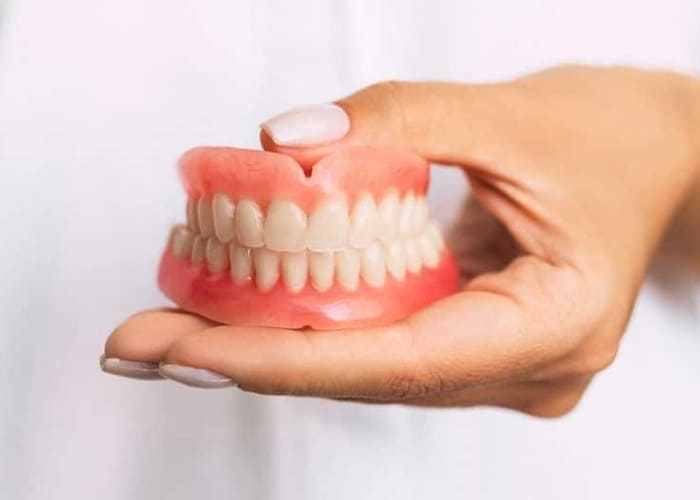
- Dentures: Replacing missing teeth is necessary for chewing. Dentures also improve facial appearance in addition to restoring function, and they are covered.
The key point is that the final decision depends on your dentist. They must send the necessary documents and images to the CDCP to prove that the treatment is for your health, not only for appearance. If you’re not sure about your application, you can use CDCP Status Checker.
What Questions Should You Ask Your Dentist Before Booking an Appointment?

To avoid unexpected costs, ask these five questions:
- Is this treatment “cosmetic”? If yes, the patient pays 100% of the cost.
- Is the treatment code in “Schedule B”? Crowns, partial dentures, and root canal retreatment usually need preauthorization.
- Does your clinic charge balance billing? Some clinics accept only the CDCP fee, but most clinics charge the difference.
- Can you send an electronic cost estimate (EDI Estimate)? This shows the patient’s share before treatment.
- Are there alternative treatments that are covered? For example, if a ceramic crown is not approved, is a metal crown or filling possible?
This checklist helps avoid financial misunderstandings.
Read more about: CDCP Coverage for Root Canals.
Final Summary
In summary, if you are wondering “does CDCP cover cosmetic dentistry,” the answer is generally no for treatments that are purely for appearance, such as teeth whitening and veneers. However, fillings and crowns may still be covered because they are considered medically necessary treatments, even if they also improve the appearance of your smile.
If you are considering tooth replacement options like dental implants, our team at Smile Avenue Dentistry in North York is here to help you every step of the way. We focus on delivering personalized, high-quality implant treatments using modern techniques to restore both function and confidence in your smile. You can learn more about your options at: dental implants in North York
FAQ
Does CDCP cover dental implants?
Dental implants are considered highly complex services. In most cases, they are not covered, and the priority is given to dentures or bridges, unless in very specific situations with prior approval.
What if my dentist charges more than the CDCP fee?
This can happen. The CDCP has a fee limit. If your dentist charges more than that limit, you must pay the difference out of pocket. It is important to ask this before treatment.
Can I use CDCP for orthodontics for my children?
No. Orthodontic services are not currently available under the Canadian Dental Care Plan. For straightening teeth for cosmetic reasons, patients must pay privately.
Can I pay for cosmetic treatment myself and then submit the receipt to CDCP for reimbursement?
No. The system is direct billing, and you cannot submit personal receipts. Also, since cosmetic services are not covered, no reimbursement will be made for them.
Have you ever been unsure whether a dental treatment would be covered under CDCP? Share your experience or questions in the comments below, your insight might help others who are trying to understand their coverage too.