
If you’ve been reading about “biocompatible” or “holistic” dentistry, you’ve probably noticed two things: it sounds appealing, and it’s hard to pin down what it actually means for the filling or crown in your own mouth.
The short answer is that biocompatible dentistry is about paying close attention to the materials placed in your teeth — what they’re made of, how they work with the tooth, and how much of your healthy natural tooth can be kept while using them.
This guide explains the term in plain language: the materials conversation (composite, ceramic and amalgam), when metal-free options are realistic, the honest case for leaving sound old fillings alone, and the claims in this area that go further than the evidence supports. For how material choices fit into actual treatment, see how material choices fit into treatment at Smile Avenue — that page covers the service; this post is the explainer that comes before it.
- What “Biocompatible” Means in Dentistry
- The Materials Conversation: Composite, Ceramic and Amalgam
- Metal-Free Fillings and Crowns: When They’re an Option
- Replacing Old Fillings: Honest Reasons To — and Not To
- Minimally Invasive Dentistry: Keeping Your Natural Tooth
- What Biocompatible Dentistry Is Not
- Questions to Ask Any Clinic About Materials
- References
- Frequently Asked Questions About Biocompatible Dentistry
What “Biocompatible” Means in Dentistry
“Biocompatible” simply means a material can sit in the body without causing harm. It’s a word used across all of medicine, not just dentistry — every filling and crown material legally used in Canada is expected to meet that basic bar. In dentistry, a biocompatible approach usually adds three practical commitments on top:
- Knowing what’s in the materials used for your fillings and crowns, and being able to explain it when you ask.
- Choosing materials case by case — considering the tooth, the chewing forces on it, your health history and your preferences — rather than one default material for every patient and every tooth.
- Preserving natural tooth wherever possible. That’s the “minimally invasive” part, covered in its own section below.
One honest limit, stated up front: “biocompatible dentistry” and “holistic dentistry” describe an approach, not a recognized dental specialty in Ontario. The dentists who provide this care are general dentists — at Smile Avenue Dentistry, all of our dentists are general dentists — and the approach is about materials and conservatism, not a separate licence, a different regulator, or a different standard of evidence.
The Materials Conversation: Composite, Ceramic and Amalgam
Most of the biocompatible dentistry conversation comes down to three material families. Here is what each one actually is:
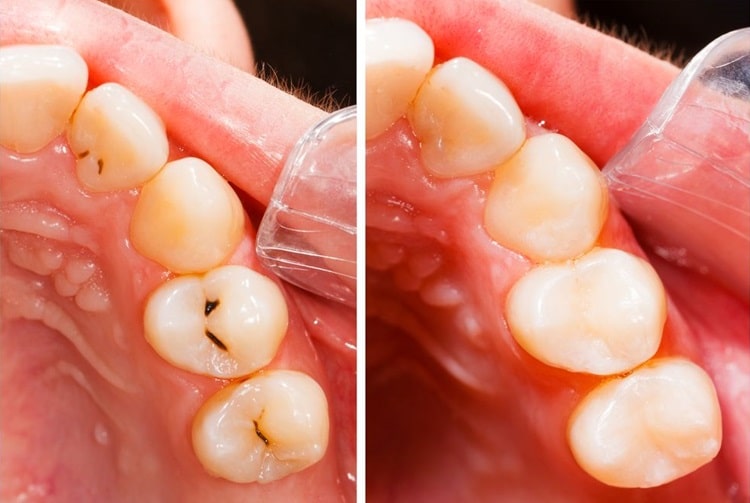
- Composite resin (tooth-coloured fillings). A mixture of resin and fine glass or ceramic particles, bonded directly to the tooth. Because it bonds, less healthy tooth usually needs to be removed to place it than for amalgam. It’s the standard choice for front teeth and for small-to-medium cavities, and the most common metal-free filling. Its trade-offs: it’s technique-sensitive to place well, and in very large fillings on back teeth under heavy biting forces it may not last as long as amalgam — size and bite matter.
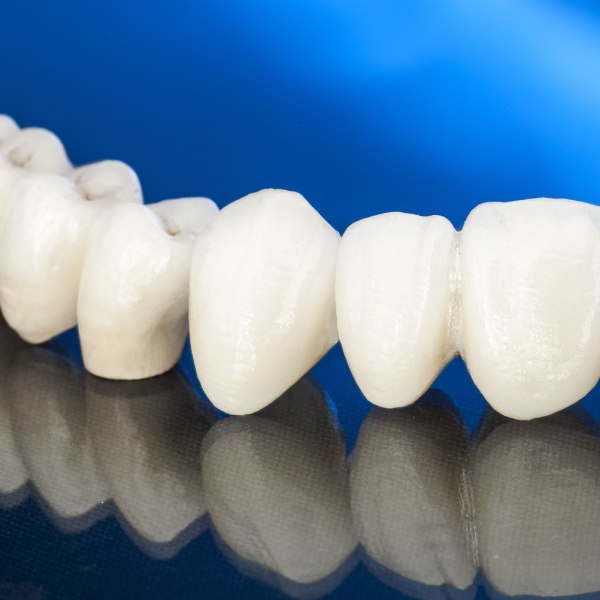
- Ceramic (porcelain and zirconia). Used for crowns, inlays and onlays. All-ceramic restorations have no metal framework, are colour-matched to neighbouring teeth, and are the usual metal-free route when a tooth needs a crown rather than a filling. Ceramic choice depends on where the tooth is and how much force it takes.
- Dental amalgam (silver fillings). A mixture of metals — mainly silver, tin and copper — combined with elemental mercury, which binds them into a hard, durable filling material. Amalgam has been used for well over a century. It is strong under chewing forces, more forgiving of moisture while being placed, and often the longest-lasting option for large back-tooth fillings. Its trade-offs: it’s silver-coloured, it contains mercury (bound within the set material), and placing it requires removing a little more tooth shape so it stays in place.
Gold and other metal alloys still exist for some crowns — durable, but visibly metallic and less commonly chosen today.
Notice what’s missing from that list: a “healthy one” and a “bad one.” Each material has a track record, strengths and limits. The real conversation is which one fits your tooth, your bite and your priorities. For the practical side of getting a filling itself, see dental fillings at Smile Avenue.
Metal-Free Fillings and Crowns: When They’re an Option
For most everyday dentistry, metal-free is a realistic option:
- Fillings: composite covers the great majority of everyday cavities without any metal, front teeth and back teeth alike.
- Crowns: all-ceramic options exist for most crown situations, front and back.
- Where metal may still be discussed: some bridges, very heavy bite forces, or back teeth where keeping the area dry during placement is difficult. If that’s your case, your dentist should explain the reasoning for your specific tooth rather than by rule.
Choosing metal-free is a legitimate preference, and you don’t need to justify it. What it shouldn’t be sold as is a medical necessity in situations where it isn’t one — the next two sections cover where that line honestly sits.
Replacing Old Fillings: Honest Reasons To — and Not To
The most common question in this whole topic is some version of “should my old silver fillings come out?” The honest answer separates two kinds of reasons.
Reasons to replace a filling — of any material:
- It’s cracked, worn, leaking at the edges, or there’s new decay under or beside it.
- The tooth itself has cracked or broken.
- It’s failing structurally — the filling no longer seals or supports the tooth.
These are the same reasons any filling gets replaced, and they’re decided by examination, sometimes with X-rays.
Reasons that do not hold up on their own:
- “It’s old, so it must be harmful.” A sound, sealed amalgam filling is not considered a health hazard for most people. Health Canada and the Canadian Dental Association consider dental amalgam safe for most patients, while recommending that its use be reduced where suitable alternatives exist — for example, for young children and during pregnancy. Those same authorities advise against removing healthy amalgam fillings just to replace them: drilling a filling out briefly increases exposure during the removal itself, and it removes healthy tooth structure that doesn’t grow back.
- “Removing them will fix my health.” There is no reliable evidence that removing sound fillings improves general health conditions, and no dentist should promise that it will. If you have health concerns, they deserve proper investigation in parallel — not a dental guarantee.
The reasonable middle path: if you prefer not to have amalgam, say so. When a filling genuinely needs replacing anyway, or when you’re planning new work, the replacement can usually be tooth-coloured. Decisions are made tooth by tooth, at an assessment — not by a rule applied to your whole mouth at once.
Minimally Invasive Dentistry: Keeping Your Natural Tooth
The least controversial part of this approach — and arguably the most valuable — is the commitment to keep as much natural tooth as possible. Natural tooth structure doesn’t grow back, so every conservative choice keeps more of your options open later. In practice it means things like:
- Smaller preparations — removing the decay and only what’s needed around it, rather than cutting for the material’s convenience.
- Bonding where suitable — adhesive techniques can hold a restoration without removing extra tooth for mechanical grip.
- Repair before replacement — in suitable cases, a failing edge of a filling can be repaired instead of replacing the whole filling and cutting the tooth again.
- Prevention before drilling — very early decay can sometimes be managed with fluoride, hygiene changes and monitoring rather than a filling, when it’s caught while it’s still reversible.
None of this is alternative dentistry. It’s mainstream, evidence-based practice — the biocompatible dentistry approach simply puts it at the centre of treatment planning and says so.
What Biocompatible Dentistry Is Not
Because this topic attracts strong claims online, here is the factual myth-check:
- It is not a recognized specialty. In Ontario, dental specialties are recognized by the RCDSO, and “holistic” or “biocompatible” dentistry is not among them. Care is provided by general dentists.
- It is not detox. Dentistry does not include “detox” programs for fillings, and claims that fillings must be removed to cleanse the body go beyond what the evidence supports.
- It is not a guarantee of better health. Material choice is one part of care. No filling material has been shown, by itself, to make patients healthier in general.
- It is not a reason to fear your existing fillings. If your fillings are sound and sealed, the evidence-based advice is to leave them in place and keep them monitored at regular checkups.
- It is not outside normal dentistry. Diagnosis, X-rays when indicated, infection-control standards and follow-up all still apply — RCDSO standards govern every dental practice in Ontario, whatever its philosophy.
If a clinic’s version of this topic skips the myth-check, that tells you something. The materials conversation is worth having — it just doesn’t need fear to sell it.
Questions to Ask Any Clinic About Materials
Whether you choose our clinic or another one, these questions separate a real materials conversation from a sales pitch:
- “What material are you recommending for this tooth, and why this one?” You want reasons specific to your tooth — size, position, bite forces — not a house rule.
- “What are the alternatives, and what changes with each?” Lifespan expectations, how much tooth is removed, and appearance are all fair topics.
- “My old filling is intact — is there a clinical reason to replace it, or a preference reason?” Both can be valid; they should never be blurred together.
- “How much natural tooth will this option preserve?” The conservative answer is usually the better long-term one.
- “Will I get the estimate in writing before we start?” You should — for any material, at any clinic.
A clinic comfortable with these questions is a clinic actually practising what this approach describes.
Material questions are good questions, and they’re welcome here. If you’d like to talk through the options for a tooth that needs work — or an old filling you’re unsure about — call Smile Avenue Dentistry at (416) 250-5354 or send us a message to book an assessment. You’ll hear what the materials are, why one is recommended for your tooth, and you’ll receive a written estimate before any treatment begins.
References
The guidance in this article reflects Canadian dental practice and patient-education resources from the Ontario Dental Association, the Canadian Dental Association and the Royal College of Dental Surgeons of Ontario (RCDSO). Dentists in Ontario are licensed by the RCDSO, and patients can verify a dentist’s registration on the RCDSO website.
The material and safety statements in this article follow the published positions of the Canadian Dental Association and Health Canada on dental restorative materials, including dental amalgam — that amalgam is considered safe for most patients, that its use should be reduced where suitable alternatives exist (including for young children and during pregnancy), and that sound amalgam fillings should not be removed solely to replace them.
Frequently Asked Questions About Biocompatible Dentistry
Are white (composite) fillings as durable as amalgam?
It depends on the size of the filling and where it sits. For small-to-medium cavities, modern composite fillings perform comparably to amalgam in clinical studies. For very large fillings on back teeth that take heavy biting forces, amalgam has historically lasted longer — that’s the situation where the difference shows up. Either material can also fail early if the tooth is overloaded or new decay develops around it. At an assessment, your dentist can say which situation your tooth is actually in, rather than answering in general.
Should I have my amalgam fillings removed?
If a filling is sound and sealed, Canadian health authorities do not recommend removing it just to replace it — removal briefly increases exposure during the drilling and takes away healthy tooth structure. Removal makes sense when the filling is failing (cracked, leaking, decay underneath) or when replacement is happening anyway and you prefer a tooth-coloured material. If you’d like yours assessed, that’s a reasonable appointment to book — but it should be a clinical or informed-preference decision, not a fear decision, and any dentist who pressures you the other way isn’t following the evidence.
What materials are used for metal-free crowns?
All-ceramic materials — porcelain-based ceramics and zirconia are the common ones. They contain no metal framework, are colour-matched to your neighbouring teeth, and are available for most crown situations, front and back. Which ceramic is chosen depends on the tooth’s position and the forces on it: front teeth prioritise appearance, back teeth prioritise strength, and some ceramics balance both. Your dentist will explain the specific choice for your tooth before anything is made.
Does biocompatible dentistry cost more?
Fees vary by material and by tooth — some ceramic options, for example, cost more to produce than other restorations, and a large restoration costs more than a small one. We don’t publish figures because a number without your tooth in front of us wouldn’t be honest. What you will always get at Smile Avenue Dentistry is a written estimate before treatment begins, with the material options explained, so you can compare and decide with the full picture in front of you.
Is a “holistic dentist” or “biocompatible dentist” a specialist?
No. In Ontario, dental specialties are recognized by the Royal College of Dental Surgeons of Ontario (RCDSO), and holistic or biocompatible dentistry is not a recognized specialty — it describes an approach to materials and conservative treatment taken by general dentists. All of Smile Avenue Dentistry’s dentists are general dentists. You can verify any Ontario dentist’s registration and status on the RCDSO’s public register, whatever approach they describe.
Will removing my old fillings improve my health?
There is no reliable evidence that removing sound fillings improves general health conditions, and we won’t claim otherwise. What removing a sound filling definitely does is cost you healthy tooth structure and briefly increase your exposure during the removal itself. If you have symptoms or health concerns, they deserve proper medical investigation — and if a filling is genuinely failing, it should be replaced for dental reasons. The two conversations shouldn’t be merged into a promise dentistry can’t keep.
What does “minimally invasive” actually change for me as a patient?
In practical terms: smaller preparations that keep more of your natural tooth, repairs instead of full replacements where a filling is only partly failing, and prevention — fluoride, hygiene coaching, monitoring — before drilling when decay is caught early enough to still be reversible. Natural tooth doesn’t grow back, so each conservative choice preserves more of your options for the future. It’s the part of this approach with the least controversy and, for most patients, the most real benefit.
I’m pregnant, or the filling is for my child — does material choice matter more for us?
Tell your dentist your full health history, including pregnancy — it genuinely informs material planning. Canadian guidance recommends reducing the use of dental amalgam where suitable alternatives exist, particularly for young children and during pregnancy, so for those patients a tooth-coloured option is usually the starting point for the conversation. The final choice is still made tooth by tooth at the assessment, and your dentist will explain the reasoning either way.