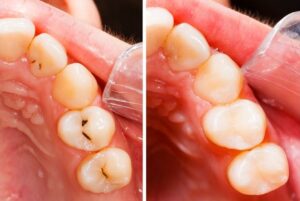


A weekend dental emergency North York families dread doesn’t check the calendar. It starts on a Saturday night, early on a Sunday, in the middle of a long weekend — exactly when you’re least sure where to turn, and whether it can wait. This guide is a triage tool: it sorts the common weekend dental problems into “act now,” “call when we open,” and “go to the hospital,” using the same symptoms any dental team would ask you about first.
Two honest notes before the lists. First, this guide can’t diagnose your tooth — only an examination can do that — so when your symptoms don’t clearly match a list, or they’re getting worse, treat that as its own answer and call sooner. Second, everything here is built around real weekend options in North York, starting with our own hours, stated plainly in the next section. For the service itself, see weekend dental care at Smile Avenue.
Table of Contents
- First, the Honest Hours Picture
- Can’t Wait: Problems That Need Care Now
- Can Usually Wait Until the Next Open Day
- What to Do Tonight (for the Can-Wait List)
- When the Hospital Is the Right Call
- What to Tell the Clinic When You Call
- References
- Frequently Asked Questions About Weekend Tooth Pain
First, the Honest Hours Picture
Triage advice is useless if it pretends every clinic is open. Here is the actual picture at Smile Avenue Dentistry, 325 Sheppard Ave E:
- Sunday: open 9–7. A Sunday problem can usually be assessed the same day. Call (416) 250-5354 and describe your symptoms — that’s how the team decides how quickly you need to be seen.
- Saturday: closed. A Saturday problem means using the lists below honestly: hospital-list symptoms go to the hospital today; can-wait problems get tonight’s measures and our phone line at 9 AM Sunday.
- Monday to Friday: open 9–7. A problem that starts Friday evening is, for practical purposes, a weekend problem — the same lists apply.
One rule sits above all of this: if your symptoms match the hospital list below, the hospital is the right call on any day, at any hour — don’t wait for any dental clinic, including ours, to open.
Can’t Wait: Problems That Need Care Now
These symptoms mean “get care today” — at an open dental clinic, or at the hospital if the hospital list below also applies:
- A knocked-out permanent tooth. This is the most time-sensitive problem in dentistry: the chance of saving the tooth falls quickly with time, so treat it as “call a dentist right now,” even on a weekend. What to do with the tooth in the meantime matters just as much — those steps live in our step-by-step first aid for dental emergencies, because they’re a procedure, not a triage decision. If no dentist is reachable, a hospital emergency department can also advise.
- Bleeding that won’t stop after an injury or after a tooth has been removed.
- Swelling with fever, or swelling that is spreading — across the face, jaw, or under the tongue. Swelling means infection until proven otherwise.
- Facial trauma — a blow to the face or jaw, teeth pushed out of position, or a suspected broken jaw.
- Severe pain that ordinary pain relief doesn’t touch and that is getting worse rather than settling. Pain at that level often signals infection or a dying nerve, and neither improves by waiting.
“Care now” doesn’t always mean “the full treatment today.” It means assessment, pain and infection control, and a plan — which is exactly what stops a bad weekend from becoming a worse week.
Can Usually Wait Until the Next Open Day
These problems feel alarming but, in most cases, can safely wait the hours until the clinic next opens — Sunday 9 AM if it’s Saturday, or the next morning on a weekday:
- A lost filling or a crown that has come off, with no pain or only mild sensitivity. If you still have the crown, keep it somewhere safe and bring it with you.
- A dull, manageable ache that responds to ordinary over-the-counter pain relief and isn’t worsening.
- A chipped tooth with no pain — no bleeding, no sharp edge cutting your cheek or tongue.
- A broken tooth with no pain. Still call when we open; “can wait” means hours, not weeks — a break without pain can still be exposing the inside of the tooth.
Waiting safely still means watching. If pain escalates sharply, swelling appears, a fever develops, or a bad taste spreads from the tooth, the problem has moved to the can’t-wait list — act on it then, not at the next opening.
What to Do Tonight (for the Can-Wait List)
If your problem is on the can-wait list, these general measures are what dental teams typically suggest for getting through the night comfortably. They’re comfort measures, not treatment:
- A cold compress on the cheek, in short intervals, can ease soreness and minor swelling discomfort.
- Over-the-counter pain relief, taken exactly as the package directs. We won’t name doses here, because the right product depends on your health history and other medications — if you take regular medication or have a condition such as asthma or liver or kidney problems, a pharmacist can confirm what’s suitable for you tonight.
- Sleep with your head raised on an extra pillow if the tooth throbs more when you lie flat.
- Soft foods, chewed on the other side, and avoid very hot or very cold foods on a sensitive tooth.
- Don’t place aspirin or any tablet directly on the gum. It doesn’t help the tooth and it burns the tissue — a persistent myth worth retiring.
- Don’t start leftover antibiotics. Antibiotics without an assessment don’t fix the cause, and partial courses can mask a worsening infection while it continues. Infections are managed after examination.
- Write down when it started and what’s changing — pain pattern, swelling, what helps. You’ll be asked exactly these questions when you call, and your notes make triage faster.
When the Hospital Is the Right Call
Some weekend symptoms are beyond any dental clinic, including ours. Go to a hospital emergency department — or call 911 — for:
- Difficulty breathing or swallowing, or drooling because swallowing hurts.
- Swelling spreading toward the eye, down the neck, or under the tongue.
- Bleeding that won’t stop.
- A suspected broken jaw, or being unable to open or close your mouth after an injury.
- Fever with rapidly spreading facial swelling.
- A blow to the head, or mouth injuries that come with other injuries.
The reason is simple: dental clinics aren’t equipped for airway problems or spreading infections; hospitals are. Hospital emergency departments can control the medical risk first and involve their on-call dental service when the tooth itself needs treatment. Going to the hospital for these symptoms isn’t an overreaction — it’s the correct destination, and no dental clinic will think less of you for choosing it.
What to Tell the Clinic When You Call

When you do call about a weekend dental emergency North York families face — Sunday at 9, or any weekday — the fastest route to the right appointment is a clear symptom report. Have these ready:
- Which tooth or area, and when it started.
- The pain pattern: constant or only when biting? Does it wake you at night? Does ordinary pain relief help, and for how long?
- Any swelling, fever, bad taste, or a pimple-like bump on the gum.
- Any injury — a fall, a blow, biting down on something hard.
- What you take: regular medications, allergies, and — if you have them handy — your insurance or program coverage details.
This is how triage works from our side as well: your answers are what decide how quickly you need to be seen and what gets booked first. For more on how urgent care is handled at our clinic, see how we handle dental emergencies in North York.
If you’re reading this on a Sunday, call Smile Avenue Dentistry at (416) 250-5354 — we’re open until 7. If it’s Saturday, run the triage above honestly: hospital symptoms go to the hospital today, can-wait problems get tonight’s measures and our phone line at 9 AM Sunday, and anything that’s worsening gets treated as can’t-wait. You can also send us a message — but for anything on the can’t-wait list, phone, don’t type.
References
The guidance in this article reflects Canadian dental practice and patient-education resources from the Ontario Dental Association, the Canadian Dental Association and the Royal College of Dental Surgeons of Ontario (RCDSO). Dentists in Ontario are licensed by the RCDSO, and patients can verify a dentist’s registration on the RCDSO website.
The triage approach in this article — which symptoms are treated as time-critical, which can safely wait for the next open day, and which belong in a hospital — reflects the standard dental-emergency guidance published for the public by the Ontario Dental Association and the Canadian Dental Association. Step-by-step first aid is deliberately not reproduced here; it is covered in our own first-aid guide, linked above.
Frequently Asked Questions About Weekend Tooth Pain
-
My tooth started hurting Saturday night — what are my options?
Start with the honest fact: Smile Avenue Dentistry is closed on Saturdays, and open Sundays 9–7. On Saturday night, sort yourself with the lists in this guide. If you have any hospital-list symptom — trouble breathing or swallowing, spreading swelling, uncontrolled bleeding — go to the hospital now. If it is a can-wait problem (a manageable ache, a lost filling, a chip without pain), use tonight’s comfort measures and call us at (416) 250-5354 when we open at 9 AM Sunday. If the pain is severe, uncontrolled, or you develop swelling or fever overnight, don’t wait for us — an emergency department can assess pain and infection at any hour.
-
Is a knocked-out tooth an emergency even on a weekend?
Yes — for a weekend dental emergency North York patients face, a knocked-out tooth is the most time-critical dental emergency there is, on any day of the week. A permanent tooth that has been knocked out has its best chance of being saved when it’s dealt with quickly, within the first hour or so, so call a dentist immediately rather than waiting for a weekday. What you do with the tooth in the meantime matters: the exact steps are in our first-aid guide, linked from the can’t-wait section above. If no dentist is reachable, a hospital emergency department can advise and involve its dental service.
-
What about a lost crown on a Sunday?
Usually not an emergency — if there’s no significant pain, a crown that has come off can typically wait for an assessment rather than needing one within the hour. The good news for Sunday specifically: we’re open Sundays 9–7, so call (416) 250-5354, describe how the tooth feels, and the team will advise whether to come in that day. Keep the crown somewhere safe and bring it with you. Don’t try to glue it back yourself — household adhesives aren’t dental cement and can damage both the crown and the tooth.
-
When should I go to the hospital instead of a dentist?
Go to a hospital emergency department — or call 911 — if you have difficulty breathing or swallowing, swelling spreading toward your eye or neck or under your tongue, bleeding that won’t stop, a suspected broken jaw, fever with rapidly spreading facial swelling, or a head injury alongside the dental problem. Dental clinics, ours included, aren’t equipped for airway or spreading-infection risks; hospitals are, and they can bring in their on-call dental service once the medical risk is controlled. The full list is in the hospital section above.
-
I have swelling but no fever — can it wait until you open?
Swelling means infection until proven otherwise, so the deciding factor is behaviour, not the thermometer. If the swelling is growing, spreading, or accompanied by a bad taste, increasing pain, or trouble opening your mouth fully, treat it as can’t-wait and be seen today — at the hospital if you also have fever or any swallowing difficulty. A small, stable swelling beside one tooth, with mild symptoms that aren’t changing, can reasonably be assessed when we next open — but call and describe it rather than deciding alone, and move it to the can’t-wait list the moment it changes.
-
Can I just take painkillers until Monday?
Over-the-counter pain relief, taken exactly as the package directs, is a reasonable way to manage mild, stable symptoms for a short stretch — it’s on our tonight list for exactly that reason. Its limit is important: it manages the symptom, not the cause, and needing more of it, or finding it stops working, is itself a signal that the problem is progressing and needs assessment sooner. If you’re unsure whether a product is suitable with your other medications or health conditions, a pharmacist can advise you tonight.
-
My child chipped a tooth on the weekend — is that an emergency?
It depends on the chip. A small chip with no pain and no bleeding can usually wait until the next open day — call us then and describe it. Call right away if there’s pain, bleeding, the tooth has moved position, or a permanent tooth has been knocked out entirely — those are time-sensitive at any age. A knocked-out baby tooth is handled differently from a knocked-out permanent tooth, so for young children the safest move is to call and describe exactly what happened rather than searching for steps online.
-
Are you open on holiday weekends too?
Our regular weekend pattern is Sunday 9–7 and closed Saturdays, year-round. On statutory holidays the hours can vary, so on a holiday weekend it’s worth a quick call to (416) 250-5354 to confirm the day’s hours before making the trip. The triage in this guide doesn’t change on holidays, though: hospital-list symptoms go to the hospital on any day of the year.