
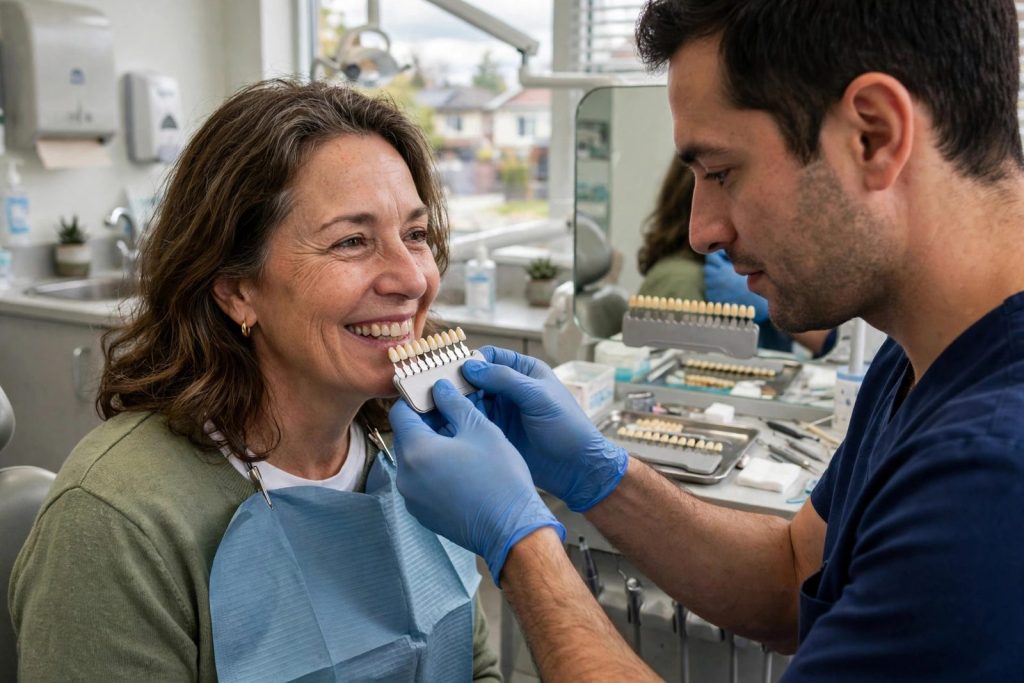
Choosing between dental bonding vs veneers in North York usually comes down to one front tooth — chipped, gapped, stained, or just slightly the wrong shape. Bonding rebuilds that tooth with tooth-coloured resin in a single visit. A veneer covers its front surface with a thin laboratory-made shell. Both can look natural; they differ in durability, repairability, and how much tooth they ask you to give up. This guide compares them side by side, including who each one does not suit.
For the treatment overview, see our page on dental veneers in North York at Smile Avenue Dentistry, then come back to the comparison.
On this page
The short answer
For a small chip, a minor gap, or one tooth that needs a subtle reshaping, bonding is usually the sensible first step — it’s conservative, quick, and repairable. For several front teeth, deeper staining, or a bigger shape change where you want the most stain-resistant surface, veneers are usually the better tool. The right answer depends on the tooth, your bite, and how you use your front teeth — all assessed in person.
Dental bonding vs veneers, side by side
| Dental bonding | Porcelain veneers | |
|---|---|---|
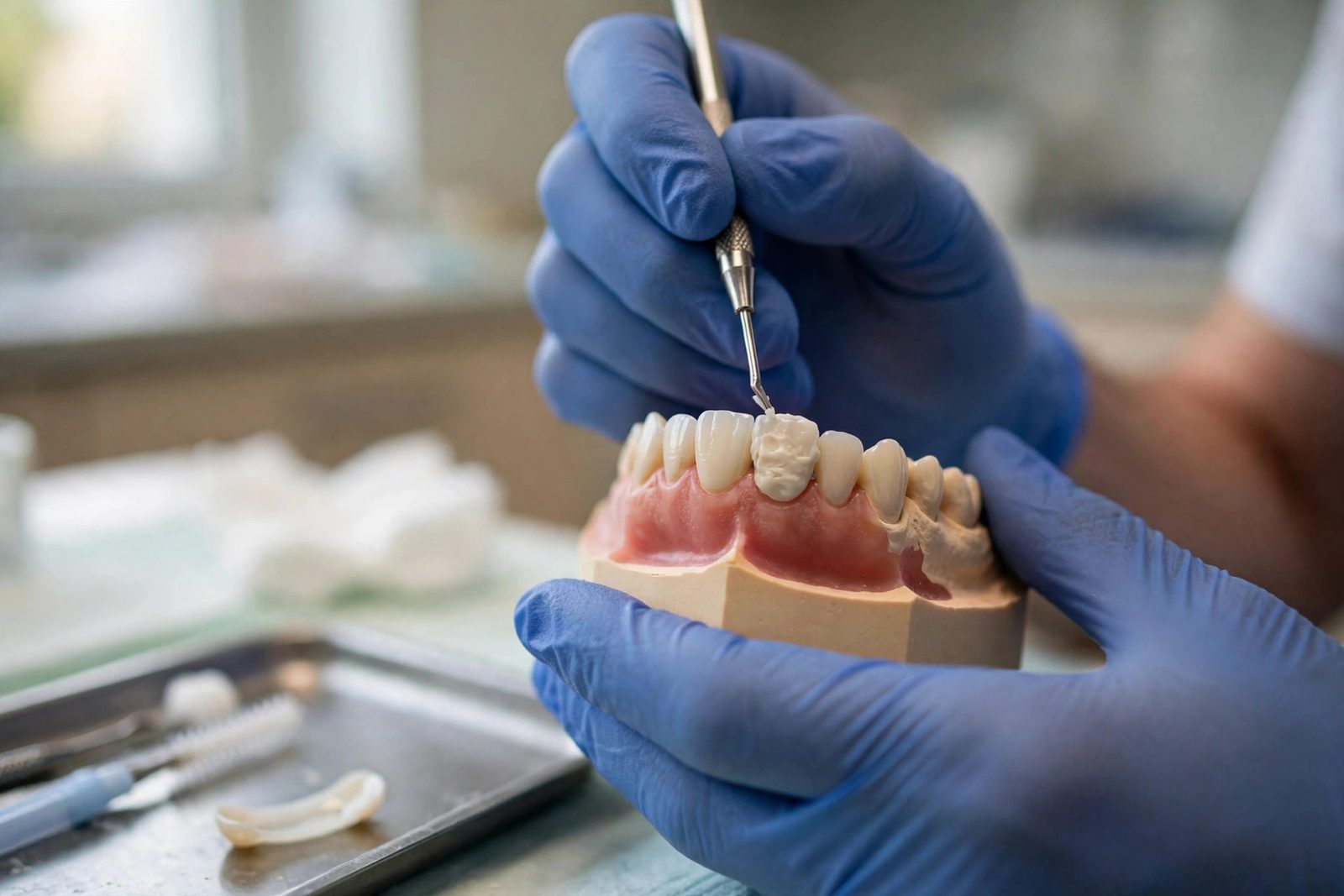
| What it is / how it works | Tooth-coloured composite resin is applied directly to the tooth, sculpted by hand, hardened with a light, and polished — usually in one visit, with little or no tooth removed. | A thin porcelain shell is made in a laboratory from an impression or scan of your prepared tooth, then bonded to its front surface. A small amount of enamel is usually removed first, which makes veneers a permanent change. |
| Typical lifespan | Demarco et al. (2011), a systematic review in the Journal of Dentistry of direct composite veneers, found annual failure rates in the low single digits, with repairs and surface wear the common reasons for intervention — in practice, bonding is often discussed as a several-year restoration that may need touch-ups. Peumans et al. (2004), a 10-year clinical evaluation of porcelain veneers published in the Journal of Adhesive Dentistry, reported estimated survival of about 91% at 10 years. These are survival figures from the literature, not promises — habits and bite forces move individual results both ways. | See the shared lifespan note in the bonding column: porcelain veneers carry the stronger long-term survival evidence (Peumans et al. 2004, ~91% estimated survival at 10 years), while composite bonding (Demarco et al. 2011) is treated as a shorter-cycle, repairable restoration. |
| Maintenance and care | Brush and floss normally. Resin picks up surface stain faster than porcelain, so coffee, tea and red wine leave their mark sooner; polishing at check-ups refreshes it. Avoid biting hard objects with a bonded edge. | Brush and floss normally; porcelain resists staining well. A night guard is often recommended if you grind. Veneers can’t be whitened, so whitening plans come before veneer shade selection. |
| Effect on neighbouring teeth and jawbone | Neither option affects the jawbone — both work on the visible part of your own tooth, whose root stays in place. Bonding adds material without removing healthy tooth in most cases, and doesn’t touch neighbouring teeth. | Veneer preparation is limited to the treated tooth’s front surface; neighbouring teeth are untouched. The trade-off is on the treated tooth itself: enamel removal is irreversible, so the tooth will always need a veneer or similar covering. |
| Who it suits and who it does not | Suits small chips, minor gaps, mild shape corrections, and patients who want a reversible, single-visit step. Less suitable for heavy grinders, large repairs, or anyone wanting a long interval before maintenance. | Suits several front teeth needing coordinated change, deeper discolouration, and patients who accept a permanent preparation. Less suitable if you grind heavily without a guard, have weak enamel, or want to keep every option reversible. |
| Number of visits and timeline | Usually one visit, start to finish. | Usually two to three visits over a few weeks: preparation and scan or impression, laboratory fabrication, then bonding and final checks. Temporary coverings may be worn in between. |
| CDCP coverage | Bonding and veneers are cosmetic services and sit outside what the Canadian Dental Care Plan is designed to cover — the plan focuses on medically necessary care for eligible patients. Smile Avenue Dentistry accepts many major insurance plans; cosmetic coverage varies widely by plan, so ask us to check yours before treatment. Federal program details: Canada.ca — Canadian Dental Care Plan. | |
How to choose
Start with size: small defect, bonding first. Then count teeth — one tooth is bonding’s home ground; a row of front teeth changing together is where veneers earn their keep. Then be honest about habits: nail-biting, pen-chewing and grinding shorten bonding’s life and can chip porcelain too. Factors that affect cost include the number of teeth, the material, and laboratory work, so an exact figure follows an assessment. Call Smile Avenue Dentistry in North York at (416) 250-5354. We’re open Sunday and closed Saturday, and our iTero scanner means veneer cases start with a digital scan rather than a mouthful of impression material.
Common questions
Can bonding be replaced with a veneer later?
Yes — this is a common path. Bonding is reversible in most cases, so patients often start there and move to a veneer later if they want the longer-lasting surface. Your dentist will check the tooth’s condition before planning the switch.
Do veneers damage your teeth?
Veneer preparation removes a thin layer of enamel from the front of the tooth, and that step can’t be undone. The tooth underneath stays alive and functional, but it will always need the veneer (or a replacement) protecting it. That’s why candidacy and conservative preparation matter.
Which looks more natural?
Both can look natural. Porcelain mimics the way enamel reflects light slightly better and holds its polish longer; well-done bonding is very convincing too, especially on a single tooth. The skill of the placement matters more than the material on the day it’s done.
What if I grind my teeth at night?
Grinding is the main enemy of both options — it chips bonding and can crack porcelain. A night guard is usually part of the plan, and heavy grinding sometimes changes which option we recommend.
Can I whiten my teeth after bonding or veneers?
Neither resin nor porcelain changes colour with whitening — only natural tooth does. If whitening is on your list, it comes first, then the bonding or veneer shade is matched to the new colour.
How do I fix a chipped bonded tooth?
Usually in one visit: fresh resin is added and blended into the existing repair. That’s one of bonding’s genuine advantages — chips are an inconvenience, not a remake.
What if a veneer comes off?
Keep it safe and call us. If the veneer is intact it can sometimes be re-bonded; if it has fractured, a replacement is made. Don’t glue it back yourself — household adhesives can damage both the veneer and the tooth.
Does insurance cover bonding or veneers?
Sometimes, for bonding done to repair a damaged tooth; veneers are usually treated as cosmetic and excluded. We accept many major insurance plans and can check your coverage before treatment starts — call (416) 250-5354.
Smile Avenue Dentistry, North York — (416) 250-5354. Open Sunday, closed Saturday.