

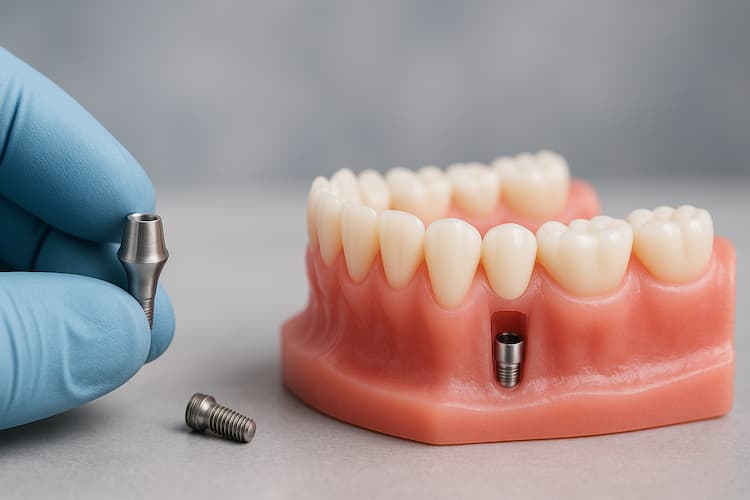
Screwless dental implants are implant restorations designed to secure the visible replacement tooth without a visible screw-access hole. Depending on the system, the crown may be retained with dental cement or with a precise locking-taper, friction-fit connection.
Tooth loss can affect your smile, but more importantly, your comfort and overall oral health. As one of the most beneficial cosmetic dental services, traditional implants have been the standard for tooth replacement. However, screwless dental implants are changing the way patients and professionals approach dental restoration.
This option focuses on comfort, implant stability, and a more natural look without using visible screws. Screwless technology simplifies the dental procedure and enhances aesthetic appearance. In this article, we’ll explore what screwless dental implants are, how they work, their potential benefits, cost considerations, and whether they may be right for you.
What Are Screwless Dental Implants?
Screwless dental implants are designed to replace missing teeth without using visible screws to secure the crown. Instead, they rely on dental cement or a precise friction-fit connection, also known as a locking-taper connection, which keeps the crown firmly attached. This approach removes the need for screw access holes and creates a clean, natural appearance that blends with surrounding teeth.
Along with their aesthetic benefits, screwless implants are highly stable and reduce the risk of screw loosening or complications over time. They are fixed in the jawbone just like traditional implants, so they function like natural teeth and are not removable like dentures. Many patients also appreciate their comfort, durability, and easy maintenance, making them a reliable long-term option for restoring both function and confidence in their smile.
Benefits of Screwless Dental Implants
Screwless implants come with many benefits for patients who are looking for a different approach from traditional implants. Here are a few advantages of this type of dental implant:
Aesthetic Appeal and Natural Look
Thanks to screwless technology, there is no need for a screw access hole. This can create a more natural-looking dental restoration and may be particularly appealing when aesthetics are important, such as for front teeth.
Comfort and Stability
Unlike screw-retained implants, there is no need for an access hole through the top of the crown. This creates a more continuous surface and can contribute to a natural appearance, especially for front teeth.
Also, because of the smoother design, there would be better adaptation and integration with the soft tissue around the implant, resulting in long-term gum health and comfort.
Reduced Risk of Complications
The design of screwless implants, especially the cementless or locking taper systems, creates a tight, friction-fit seal that reduces microleakage. Therefore, the risk of bacterial contamination and subsequent inflammation is very low.
Improved Longevity and Durability
Because screwless implants avoid the mechanical stress points that come with screw channels, they may last longer. The strong friction-fit or tapered connection distributes biting forces more evenly, reducing the likelihood of fractures or loosening over time.
Easier Maintenance and Hygiene
The absence of screw access holes means there are fewer gaps where food particles or bacteria can accumulate. This simplifies oral hygiene for patients, making daily brushing and flossing more effective and reducing the chance of peri-implantitis.
Strong Bond Between Crown and Implant
Screwless systems often rely on precision engineering to create a stable, tight bond between the crown and the implant. This strong attachment mimics natural tooth stability, allowing patients to chew with confidence without worrying about loosening.
Not Sure If Screwless Implants Are for You?
You can find out the best option according to your needs with the help of the Smile Avenue Dentistry team of experts in North York. Simply book a consultation session with us so we can guide you through this journey.
How Do Screwless Dental Implants Work?
There are different types of dental implants on the market, and screwless systems use a different approach to retaining the final restoration. These implants are designed to avoid the use of a traditional screw-access channel when attaching the crown. The process depends on which type of screwless implant is used, such as a cement-retained or locking-taper system.
Both systems begin with placing the implant into the jawbone and waiting for it to fuse with the bone. This is called osseointegration. The main difference comes in the way the visible tooth is attached afterward. While the screw-retained method is avoided, screwless technology relies on either dental cement or a precision-fit connection to keep the crown stable. Let’s take a closer look at both approaches:
Cement-Retained Screwless Implants
In this method, no screw is used to retain the crown. Instead, the crown is attached to the implant restoration using dental cement. The cement helps bond the crown securely in place. This can simplify crown retention, although future removal may be more difficult in some cases.
Locking-Taper Implants
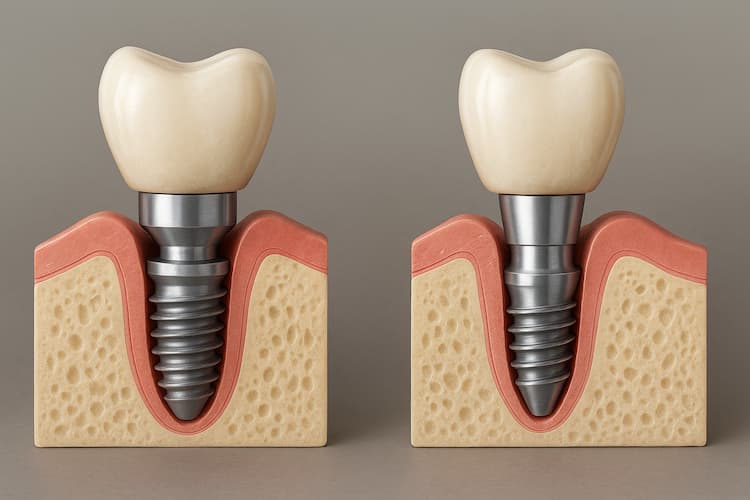
No screws and no cement are used in this type. The crown or abutment-crown unit fits tightly into the implant by using a special conical, or tapered, connection. This method relies on friction to stay in place. The design of the locking taper allows for a strong and stable fit while also making future removal easier if needed.
Screwless Dental Implants Cost
The cost of screwless dental implants can vary because there is no single fee that applies to every patient or every implant system. Your treatment plan depends on the condition of the missing-tooth area, the number of teeth being replaced, the implant and restoration design, and whether additional treatment is needed before the implant can be restored.
Factors that may affect the overall cost include diagnostic imaging, the number of implants, the type of final crown or restoration, the implant system being used, and whether procedures such as bone grafting are recommended. For that reason, the most useful cost estimate comes after a dental assessment and treatment plan.
If you’re comparing the cost of screwless dental implants with traditional dental implants in North York, it is also important to compare the complete treatment plan rather than only the initial implant fee.
Are Screwless Dental Implants Right for You?
This method may be suitable for some patients who are going through a dental restoration procedure. However, clinical and individual anatomical factors have a crucial role in determining whether a screwless dental implant is right for you. Normally, you may be considered for these implants if:
- You’re seeking enhanced aesthetics: Screwless implants are particularly beneficial for the front teeth’s aesthetic appearance. The absence of screw access holes makes them a good choice if you’re looking for a natural look.
- You’re looking for a minimally invasive procedure: This method often involves minimal drilling and can result in a shorter recovery time.
- You have enough bone density: Having a strong and dense jawbone is essential for the stability of screwless implants, especially if the friction-fit, or locking-taper, method is used.
- You have a history of screw-related complications: If you experienced issues like screw loosening or infection with previous implants, screwless implants are less prone to these problems.
- You have a medical condition that affects healing: Conditions like diabetes can influence recovery, so screwless implants are more beneficial because of their less invasive nature.
Read More: Top 10 Dental Implant Brands You Should Know in 2026
Screwless Dental Implants for Seniors
Older adults who are considering tooth replacement may also ask whether screwless dental implants are suitable for seniors. Age by itself does not provide enough information to decide whether an implant is appropriate. A dentist needs to assess the condition of the jawbone, gums, remaining teeth, medical history, medications, oral hygiene, and the specific area that needs to be restored.
For some seniors, dental implants can provide a fixed alternative to removable tooth replacement. However, the appropriate implant design and restoration should be selected individually. If bone volume, healing, medical conditions, or other factors need additional consideration, these should be reviewed before treatment begins.
A consultation can help determine whether a screwless system, a traditional implant restoration, or another tooth-replacement option is the more appropriate choice for an individual patient.
What to Look for When Reading Screwless Dental Implant Reviews
Patients often search for screwless dental implant reviews before deciding whether to discuss this type of treatment with a dentist. Reviews can provide insight into individual experiences, but they cannot determine whether a particular implant system is suitable for your mouth.
When reading reviews, consider whether the information explains the type of implant system used, the type of restoration, the patient’s starting condition, follow-up care, and how long the restoration has been in place. These details can be more useful than relying on a single positive or negative experience.
The final decision should be based on a clinical assessment and discussion of the available implant options rather than reviews alone.
Comparing Screwless Dental Implants with Traditional Implants
Screwless and traditional implants each offer distinct advantages and considerations. Screwless implants offer aesthetic benefits and a less invasive procedure. Traditional implants are a reliable choice for many patients due to their long-lasting success and ease of maintenance.
If you want to determine the most appropriate option based on your needs, consult with a dental professional. However, below is a comparison to help you understand their differences.
| Feature | Screwless implants | Traditional implants |
| Retention method | A friction-fit, or locking-taper, connection or dental cement is used. | Screws are used to secure the crown to the implant fixture. |
| Aesthetic appearance | Offers a more natural look, especially for front teeth. | May have visible screw access holes. |
| Surgical procedure | Less invasive with shorter surgery time and quicker recovery period. | More invasive for using screw placement and needs longer healing time. |
| Retrievability | It might be challenging to remove or adjust depending on the design. | Easily retrievable for maintenance, repair, or adjustment. |
| Risk of complications | Cement methods may create issues if excess cement isn’t properly managed. | Possibility of screw loosening, fracture, or peri-implantitis if not properly maintained. |
| Long-term success rate | Has high success rates; for example, friction-fit has shown 100% survival in certain studies. | Has well-established success rates; studies show 10-year survival rates between 96.8% and 98.5%. |
| Cost considerations | Have higher initial costs due to advanced design and materials. | More affordable upfront, but may need additional costs related to maintenance and complications over time. |
Conclusion
Screwless dental implants provide a comfortable, aesthetic, and less invasive option for tooth replacement. This can be a good solution if you’re looking for a natural-looking tooth, but consulting with a dental professional is important when deciding which implant and restoration design is appropriate for you.
If you’re considering implants, Smile Avenue Dentistry offers dental implant procedures along with other dental services. Contact us to learn more or request an appointment.
FAQ
-
Are screwless dental implants available in North York, and how can I get them?
Yes! Our North York clinic offers the latest screwless dental implant technology, providing a faster, more comfortable tooth replacement option. Schedule a consultation to see if this innovative treatment is right for you.
-
Are screwless dental implants any good?
Of course, screwless implants offer excellent aesthetics, minimized risk of screw-related complications, and faster procedures. If indicated properly typically has high success rates too.
-
Can dental implants be done without screws?
Sure, there are screwless options that use locking taper or cement-retained designs instead of screws to secure the crown.
-
How do screwless dental implants stay in?
They either rely on a locking taper (friction-fit) or dental cement to hold the crown in place.
-
How are screwless dental implants fitted?
The implant post is placed during surgery, then the crown is attached by using a friction-fit method or dental cement.
-
How much do screwless dental implants cost?
The cost varies depending on the implant system, number of implants, final restoration, diagnostic needs, and whether additional procedures are required. A dental assessment is needed to provide an individualized treatment estimate.
-
Are screwless dental implants suitable for seniors?
They may be an option for some older adults, but age alone does not determine suitability. Bone condition, gum health, medical history, medications, oral hygiene, and the planned restoration should be assessed before treatment.
-
What are screwless dental implants?
Screwless dental implants are implant restorations in which the visible crown is retained without a visible screw-access hole. Depending on the system, the crown may be secured with dental cement or a locking-taper friction-fit connection.