

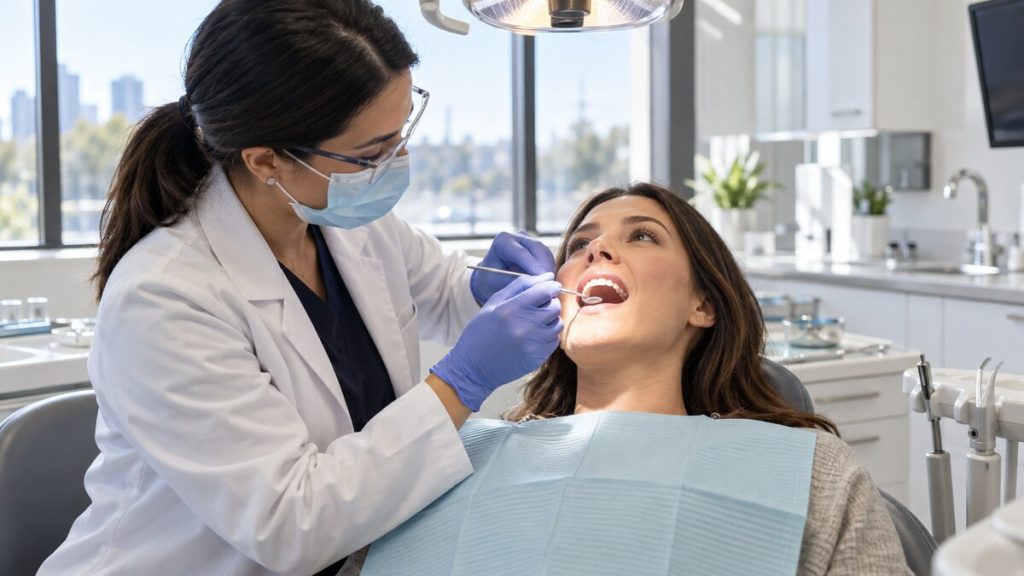
Oral cancer screening is a visual and physical examination of the mouth, head and neck that helps a dentist look for unusual changes that may need further evaluation. It can be part of a routine dental examination, but screening itself does not diagnose cancer.
Dentists look for changes in the lips, tongue, gums, cheeks, floor and roof of the mouth and other soft tissues. They may also feel the jaw and neck for unusual swelling or enlarged lymph nodes.
Most changes found during a dental examination are not automatically cancer. If something appears unusual or does not resolve as expected, the next step may be monitoring, referral or additional testing.
Important: Oral cancer screening can identify tissue changes that need attention, but it cannot confirm cancer by itself. A suspicious finding may require further assessment or biopsy before a diagnosis can be made.
What Is Oral Cancer?
Oral cancer begins in cells of the mouth. The Canadian Cancer Society states that the most common type is squamous cell carcinoma, which begins in the cells lining the oral cavity.
Areas that can be affected include:
- the lips;
- front part of the tongue;
- floor of the mouth;
- inner cheeks;
- gums;
- hard palate; and
- other tissues within the oral cavity.
Abnormal tissue does not always mean cancer. Some changes are benign, while others may be precancerous and need further investigation.
That distinction is one reason professional evaluation matters.
Is Oral Cancer Screening Part of a Regular Dental Exam?
It can be.
The Ontario Dental Association describes oral cancer screening as one of the areas assessed during a general dental examination. A dentist may inspect the mouth and also examine the neck and surrounding tissues for abnormalities.
At Smile Avenue Dentistry, oral cancer screening is listed among the dental services available at the North York clinic.
The exact examination may vary based on your health history, symptoms and clinical findings.
You can review our dental services in North York for more information about preventive, diagnostic and restorative care available at Smile Avenue Dentistry.
What Does a Dentist Look for During an Oral Cancer Screening?
A dentist is not simply checking the teeth.
The examination can include the soft tissues throughout the mouth and surrounding areas.
Lips
The dentist may inspect the outside and inside of the lips for:
- sores that are not healing;
- unusual patches;
- persistent swelling;
- colour changes; or
- lumps.
Cheeks
The inner lining of the cheeks may be examined for changes in colour, texture or thickness.
Tongue
The dentist may inspect the top, sides and underside of the tongue.
Persistent lumps, colour changes, sores and loss of sensation are among the changes that can require further investigation.
Floor of the Mouth
The tissue beneath the tongue is another area that may be visually examined and gently felt for abnormalities.
Roof of the Mouth
The hard and soft tissues of the palate may be checked for changes in colour, texture or surface appearance.
Gums
The dentist may look for unexplained tissue changes, lesions or swelling that do not appear consistent with routine gum inflammation.
Jaw and Neck
A dental examination may also include feeling the jaw, neck and lymph-node areas for swelling or unusual lumps.
Assessment for suspected oral cancer can involve examination of the mouth, jaw, salivary glands and lymph nodes in the neck.
What Are the Warning Signs of Oral Cancer?
One of the most commonly reported signs is a sore or ulcer on the lip or inside the mouth that does not heal. Persistent mouth pain is another possible symptom.
Other symptoms that may deserve professional assessment include:
- a persistent red, white or mixed red-and-white patch;
- a lump or growth in the mouth or on the tongue;
- unexplained thickening inside the cheek;
- persistent bleeding in the mouth;
- numbness of the tongue or lips;
- unexplained loose teeth;
- dentures that suddenly stop fitting properly;
- persistent jaw swelling or pain;
- difficulty swallowing;
- persistent voice changes;
- swollen lymph nodes in the neck; or
- an earache that does not resolve.
These symptoms can have causes other than cancer.
The important point is persistence or unexplained change.
How Long Should You Wait Before Getting a Mouth Sore Checked?
Many common mouth sores heal on their own.
However, a sore or ulcer that does not heal should not simply be ignored.
If you notice an area that is not improving, keeps returning, becomes larger, bleeds unexpectedly or is associated with another concerning symptom, arrange an examination.
You do not need to decide whether it is cancer yourself.
The purpose of the appointment is to determine what the area may represent and whether further investigation is needed.
What Are Red or White Patches in the Mouth?
Changes in oral tissue can sometimes appear as red or white patches.
A white or grey patch may be described as leukoplakia. A red patch may be described as erythroplakia.
These changes can sometimes be associated with precancerous alterations, although an abnormal-looking patch is not automatically cancer.
If a patch persists, changes or has no obvious explanation, it should be professionally assessed.
What Happens if the Dentist Finds Something Suspicious?
Finding an unusual area during screening does not mean you have oral cancer.
A dentist may first consider:
- how long the area has been present;
- whether it is painful;
- whether there is an obvious traumatic cause;
- whether it changes over time;
- your health history; and
- relevant risk factors.
Depending on the finding, the dentist may monitor it, reassess it after a period of time or refer you for further evaluation.
Diagnosis can involve additional tests, and a tissue biopsy may ultimately be needed to determine whether abnormal cells are cancerous.
Screening and diagnosis are not the same thing
| Step | Purpose |
|---|---|
| Screening / examination | Looks for abnormalities that may require attention |
| Further assessment | Investigates a suspicious finding in more detail |
| Biopsy / pathology | Examines tissue to establish a diagnosis |
A routine dental screening cannot confirm cancer simply by looking at a lesion.
Does Oral Cancer Screening Hurt?
A standard visual and physical oral examination is generally non-invasive.
The dentist may look closely at soft tissues and gently feel areas of the mouth, jaw or neck.
If an abnormality requires additional testing, those procedures are separate from the initial screening examination and should be explained before they are performed.
Who Is at Higher Risk of Oral Cancer?
Oral cancer can occur in people without obvious risk factors, so symptoms should not be dismissed solely because someone considers themselves low-risk.
Recognized risk factors include tobacco use, alcohol consumption and certain HPV infections.
Risk assessment may therefore include questions about:
- smoking;
- smokeless tobacco;
- alcohol consumption;
- previous oral cancer;
- HPV-related risk;
- age;
- prior suspicious oral lesions; and
- other relevant medical history.
Having a risk factor does not mean that a person has or will develop cancer.
It means the information may be relevant when a clinician assesses oral changes.
Can People Who Do Not Smoke Get Oral Cancer?
Yes.
Tobacco is an important risk factor, but oral cancer is not limited to people who smoke.
Oral cancer can affect people without a smoking history, which is why persistent tissue changes should still be assessed regardless of whether someone considers themselves high-risk.
If you notice a persistent change in your mouth, smoking history should not determine whether you seek an examination.
What Does HPV Have to Do With Oral Cancer?
Certain types of human papillomavirus are part of the modern oral and oropharyngeal cancer risk discussion.
HPV is only one part of the risk picture. A dental examination cannot determine someone’s HPV status simply by looking in the mouth.
Questions about HPV vaccination or individual medical risk should be discussed with an appropriate healthcare professional.
Should You Check Your Own Mouth at Home?
Self-awareness can be useful, but it is not a replacement for professional examination.
You can periodically pay attention to:
- new sores;
- unusual red or white patches;
- lumps;
- persistent swelling;
- unexplained bleeding;
- changes in your tongue;
- persistent numbness; or
- areas that do not heal.
A mirror and good lighting can help you notice obvious changes.
The purpose is awareness, not self-diagnosis.
How Often Should You Have an Oral Cancer Screening?
There is no single screening interval that is appropriate for every patient.
Dental examination frequency should be based on individual oral health, general health, symptoms, lifestyle factors and clinical findings rather than applying one schedule to everyone.
For many patients, soft-tissue examination is incorporated into routine dental care.
Your dentist may recommend a different recall schedule if your health history, symptoms or clinical findings require closer monitoring.
Can Dental X-Rays Detect Oral Cancer?
Dental X-rays are useful for many conditions involving teeth and bone, but a routine oral cancer examination relies heavily on visual and physical assessment of soft tissues.
Dental X-rays may be used when clinically necessary to identify problems that cannot be seen during a visual examination, but they are not a substitute for soft-tissue examination.
If cancer is suspected, additional diagnostic imaging may later be ordered by the appropriate healthcare team depending on the clinical situation.
What About Special Lights or Oral Cancer Screening Devices?
Some dental practices use adjunctive technologies in addition to visual and physical examination.
These tools should not be presented as a definitive cancer test.
Visual inspection and palpation remain important parts of routine oral examination, and additional technologies do not replace appropriate clinical assessment or biopsy when tissue is genuinely suspicious.
If a practice uses an adjunctive device, ask what the result means and what the next step would be if an abnormality is found.
Does a Normal Screening Mean You Definitely Do Not Have Oral Cancer?
No screening examination can provide an absolute guarantee.
A dental screening represents what can be assessed at that point in time.
Some abnormalities may develop later, may occur in areas that require other types of examination, or may initially be subtle.
That is why persistent or changing symptoms should still be reported even if your previous dental visit was normal.
When Should You Contact a Dentist Rather Than Wait for Your Next Checkup?
Do not wait for a routine recall appointment if you notice a persistent or unexplained change.
Contact a dental or medical professional if you develop:
- a sore that is not healing;
- a growing lump;
- persistent red or white tissue changes;
- unexplained bleeding;
- new numbness;
- persistent trouble swallowing;
- unexplained jaw swelling;
- a neck lump; or
- another change that is continuing or worsening.
A professional can determine whether the problem appears minor, needs monitoring or requires referral.
Oral Cancer Screening in North York
Smile Avenue Dentistry lists oral cancer screening among the preventive and diagnostic services available at its North York clinic.
During a dental examination, the dental team can assess the teeth, gums and visible oral soft tissues and determine whether any area requires additional attention.
If you have noticed a persistent sore, unexplained patch, lump or another change in your mouth, mention it when booking rather than assuming it can wait until your next routine appointment.
Concerned About a Change in Your Mouth?
Smile Avenue Dentistry provides dental examinations and oral cancer screening in North York. If you have noticed a persistent sore, patch, lump or unexplained tissue change, arrange an assessment. Appointment availability must be confirmed.
Frequently Asked Questions About Oral Cancer Screening
What is oral cancer screening?
Oral cancer screening is an examination of the mouth and surrounding tissues for unusual changes that may require additional investigation. It does not by itself diagnose cancer.
What does a dentist look for during oral cancer screening?
A dentist may look for persistent sores, unusual red or white patches, lumps, tissue thickening, unexplained bleeding and other changes in the lips, cheeks, tongue, gums, palate and floor of the mouth. The jaw and neck may also be examined.
Is oral cancer screening painful?
A routine visual and physical examination is generally non-invasive. Additional diagnostic procedures are separate and would be discussed if a suspicious area requires further testing.
Can a dentist diagnose oral cancer?
A dentist can identify suspicious findings and recommend appropriate follow-up, but definitive diagnosis generally requires additional testing such as biopsy and pathology.
Can you get oral cancer if you do not smoke?
Yes. Tobacco use is an important risk factor, but oral cancer can also occur in people who do not smoke. Other factors, including alcohol and certain HPV infections, may also be relevant.
Should a mouth ulcer always be checked?
Most mouth ulcers are not cancer. However, a sore that does not heal, grows, changes or has no clear explanation should be professionally assessed.
Is oral cancer screening included in a regular dental exam?
Soft-tissue and oral cancer assessment can form part of a comprehensive dental examination. The exact examination depends on the patient, health history and clinical findings.
References & Sources
- Canadian Cancer Society: Signs and Symptoms of Oral Cancer
- Canadian Cancer Society: Diagnosis of Oral Cancer
- Canadian Cancer Society: What Is Oral Cancer?
- Canadian Cancer Society: Precancerous Conditions of the Mouth
- Ontario Dental Association: General Dental Examination
- Canadian Dental Association: 2026 Oral Cancer Awareness
- Smile Avenue Dentistry: Dental Services
Medical and dental disclaimer: This article provides general information and is not a diagnosis or a substitute for examination by a qualified healthcare professional. Persistent sores, lumps, swallowing problems, unexplained bleeding, numbness or other concerning symptoms should be professionally assessed.