If a tooth hurts when you bite or chew, the cause can range from a cavity or loose filling to a cracked tooth, irritated pulp, infection, or pressure from clenching and grinding. The pattern of the pain matters, but symptoms alone cannot confirm the diagnosis. A dentist may need to examine the tooth and, when appropriate, take an X-ray or perform additional tests to find the cause.
Call a dentist promptly if: the pain is severe, keeps returning, is getting worse, or is accompanied by swelling, a bad taste or drainage, a broken tooth, or lingering sensitivity to hot or cold. If you have difficulty breathing or swallowing, uncontrolled bleeding, serious facial trauma, or rapidly worsening swelling of the face or neck, call 911 or go to the nearest emergency department.
Why Does My Tooth Hurt When I Bite?
Biting pain happens when pressure is transferred through a tooth and the tissues around it. If a tooth is decayed, cracked, inflamed, infected, or structurally weakened, that pressure can trigger pain. In some cases the discomfort is sharp and brief; in others it feels like a dull ache, pressure, or tenderness that lasts after chewing.
The American Association of Endodontists notes that sharp pain when biting can be associated with decay, a loose filling, a crack in the tooth, or damage to the pulp tissue inside the tooth. Because several different problems can produce a similar symptom, the most useful next step is to identify the source rather than trying to treat the pain based on the symptom alone.
| What you notice | Possible explanation | What to do |
|---|---|---|
| Sharp pain when biting down | Decay, a loose restoration, a crack, or pulp irritation may be involved. | Arrange a dental assessment, especially if the pain repeats. |
| Pain when releasing the bite | A cracked tooth can sometimes cause intermittent pain during chewing or when pressure is released. | Avoid chewing on that side and have the tooth examined. |
| Lingering pain after hot or cold | The pulp may be significantly inflamed or damaged. | Contact a dentist promptly. |
| Pain with swelling, drainage, or a bad taste | A dental infection or abscess may be present. | Seek prompt dental care; worsening facial or neck swelling can require emergency medical care. |
| Dull aching with jaw soreness, especially in the morning | Clenching or grinding may be contributing to tooth and jaw discomfort. | Discuss the pattern with your dentist. |
1. A Cracked Tooth or Fractured Cusp
A cracked tooth is one of the classic causes of pain during chewing. The pain may come and go, which can make the tooth difficult to identify at home. Some people notice discomfort when they bite down; others feel a sharp sensation when they release pressure.
The treatment depends on the type, location, and depth of the crack. A small fractured cusp may be restored with a filling or crown. A deeper crack that reaches the pulp may require root canal treatment and a crown. A crack that extends too far below the gumline may make the tooth impossible to restore predictably.
If the tooth is visibly broken or cracked, read our broken tooth repair guide and avoid chewing on the affected side until the tooth is assessed.
2. Tooth Decay or a Cavity
Decay can weaken enamel and dentin and make a tooth sensitive to chewing pressure. A small cavity may not cause obvious symptoms, but a larger or progressing cavity can become painful and may eventually affect the pulp.
The Canadian Dental Association explains that cavities can get larger if they are not treated and may lead to pain, infection, or tooth loss. Whether the tooth needs a filling, an onlay, a crown, or another treatment depends on how much healthy tooth structure remains and whether the pulp has been affected.
Learn more about dental fillings and our guide to when a cavity may be too large for a filling.
3. A Loose, Broken, or Failing Filling
A filling that is loose, cracked, or no longer sealing the tooth properly can make chewing uncomfortable. Decay can also develop around an older restoration. The tooth may feel sensitive to pressure, temperature, or sweets depending on the underlying problem.
A dentist can check the restoration and surrounding tooth structure and determine whether the filling can be repaired, needs replacement, or whether the tooth requires a different restoration.
4. Pulp Inflammation or a Tooth Infection
The pulp is the soft tissue inside the tooth that contains nerves and blood vessels. Deep decay, a crack, trauma, or problems around an existing restoration can irritate or infect the pulp. Severe pain while chewing or biting, lingering sensitivity to hot or cold, swelling, or a pimple-like bump on the gum can be warning signs that the pulp needs evaluation.
If the pulp is irreversibly inflamed or infected, root canal treatment may be recommended to remove the diseased tissue and preserve the tooth when it can still be restored.
For more information, see our root canal treatment in North York page.
5. A Dental Abscess
An abscess is an infection involving the tooth or surrounding tissues. Pain can become constant or severe, and the tooth may be tender to biting or touch. Swelling, drainage, fever, or a bad taste can occur in some cases.
A dental abscess needs professional assessment. Treatment depends on the source and may involve drainage, root canal therapy, extraction, or medication when clinically indicated. Antibiotics alone do not correct the underlying dental source in many localized infections.
Read more about dental abscess treatment.
6. Clenching or Grinding Your Teeth
Clenching and grinding can place repeated force on teeth, restorations, and jaw muscles. The Canadian Dental Association lists tooth or jaw pain, especially on waking, as one possible sign of bruxism. Teeth may also feel sensitive, worn, fractured, or slightly mobile.
If your discomfort is worse in the morning, is accompanied by jaw tightness, or affects several teeth rather than one specific tooth, mention that pattern during your dental examination. The dentist can look for signs of wear and discuss whether clenching or grinding may be contributing.
7. Recent Dental Treatment
Some temporary sensitivity can occur after dental treatment because the tissues around or inside the tooth may be irritated. The American Association of Endodontists notes that sensitivity after treatment can sometimes settle, but persistent or worsening pain should be assessed.
If a recently treated tooth becomes increasingly painful to bite on, feels different from the surrounding teeth, develops swelling, or does not improve as expected, contact the dental office that treated it.
How Does a Dentist Find the Cause of Biting Pain?
The examination is aimed at identifying which tooth is involved and whether the problem is structural, restorative, pulpal, periodontal, or related to the bite. Depending on the symptoms, a dentist may:
- ask when the pain started and whether it occurs during biting, release, heat, cold, or spontaneously;
- examine the tooth for decay, cracks, broken cusps, or failing restorations;
- check the gums and surrounding tissues for swelling or tenderness;
- assess how the teeth contact when you bite;
- perform temperature, tapping, or other diagnostic tests when appropriate; and
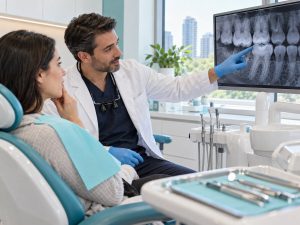
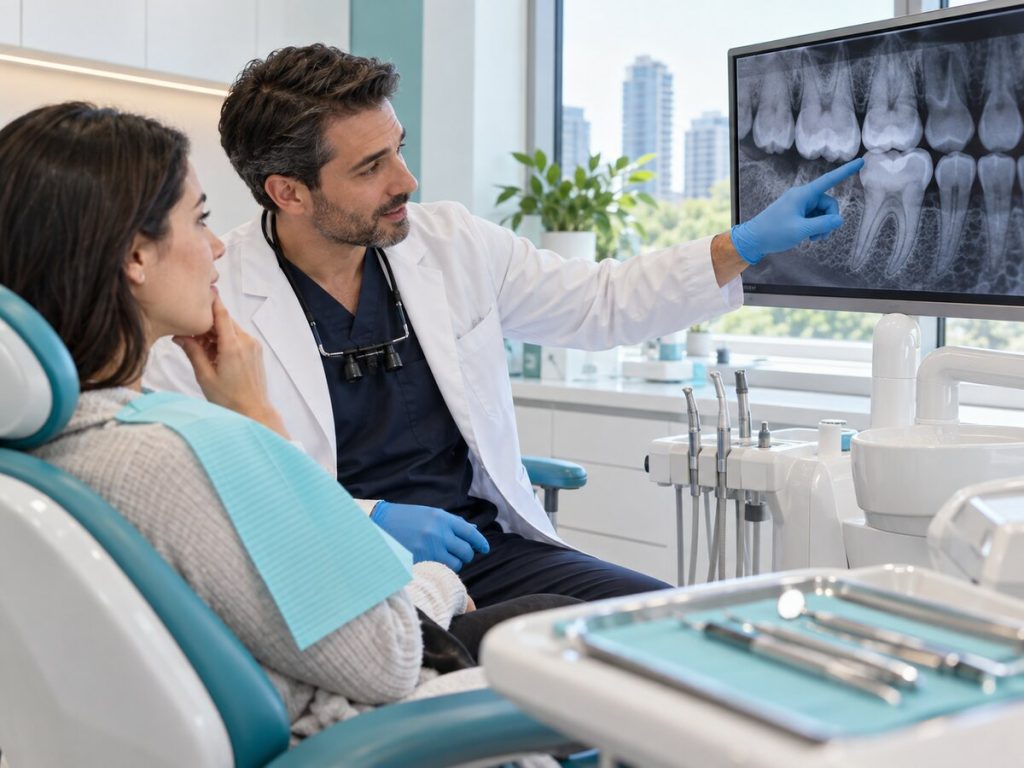
- recommend dental X-rays when they are needed to look for decay, infection, bone changes, or other problems that are not visible directly.
Not every painful tooth needs a root canal, and not every crack means the tooth has to be removed. Treatment should follow the diagnosis and the restorability of the tooth.
What Can You Do Until Your Appointment?
While you are waiting to be seen, protect the tooth and avoid making the problem worse:
- chew on the opposite side if biting triggers the pain;
- choose softer foods and avoid very hard or sticky foods;
- continue gentle brushing and flossing around the area;
- use a cold compress outside the face if there is localized swelling;
- if you use an over-the-counter pain medicine, use only one that is safe for you and follow the label or your pharmacist’s advice; and
- do not place aspirin, pain-relief tablets, essential oils, or other chemicals directly on the tooth or gum.
These steps may make the area easier to manage, but they do not diagnose or treat the cause of the pain.
When Is Tooth Pain While Biting an Emergency?
Call a dentist promptly when biting pain is severe, persistent, worsening, associated with a broken tooth, or accompanied by localized swelling, drainage, or fever. A knocked-out adult tooth also needs immediate dental attention.
Call 911 or go to the nearest emergency department if you have difficulty breathing or swallowing, uncontrolled heavy bleeding, loss of consciousness, serious head or jaw trauma, or rapidly worsening swelling of the face or neck with severe illness.
For urgent dental concerns in North York, visit our emergency dentist in North York page.
Tooth Hurts When You Bite?
Smile Avenue Dentistry can examine the tooth and explain whether the pain is related to decay, a crack, a restoration, the pulp, or another dental problem. Appointment availability must be confirmed.
Questions About Tooth Pain When Biting
Why does my tooth hurt only when I bite down?
Pain that appears mainly during biting can be associated with decay, a loose filling, a crack, or irritation or damage inside the tooth. A dental examination is needed to determine which cause applies.
Why does my tooth hurt when I release my bite?
Intermittent pain during chewing or when pressure is released can occur with a cracked tooth. Because cracks are not always easy to see, repeated biting pain should be evaluated rather than ignored.
Does pain when biting mean I need a root canal?
No. Biting pain can have several causes. Root canal treatment is considered when the pulp is irreversibly inflamed or infected and the tooth can be restored. Other causes may be treated with a filling, crown, repair, bite adjustment, periodontal care, or another approach depending on the diagnosis.
Can a cavity make a tooth hurt when chewing?
Yes. A progressing cavity can weaken the tooth and cause pain or sensitivity. The treatment depends on the size and location of the decay and whether the pulp or surrounding tissues are involved.
Should I stop chewing on a painful tooth?
Until the tooth is assessed, avoiding heavy chewing on the painful side can reduce additional stress. Choose softer foods and arrange an examination if the pain persists, worsens, or is associated with swelling or a broken tooth.
References & Sources
- American Association of Endodontists: Tooth Pain
- American Association of Endodontists: Cracked Teeth
- Canadian Dental Association: Cavities
- Canadian Dental Association: Fillings
- Canadian Dental Association: Root Canal Treatment
Medical disclaimer: This article provides general oral health information and is not a diagnosis or a substitute for an examination by a dental professional.