


Losing a baby tooth early can cause problems for your child’s dental development. When a tooth is lost prematurely due to decay, injury, or extraction, the surrounding teeth can shift into the empty space. This may lead to crowding or misalignment as permanent teeth come in. A dental space maintainer keeps the space open and guides proper tooth eruption. This article explains why space maintainers matter, how they work, and how they can reduce the chance of needing expensive orthodontic treatment later.
What Is a Dental Space Maintainer?
A dental space maintainer is a device used in pediatric dentistry to keep the gap open after a child loses a baby tooth prematurely. This prevents adjacent teeth from shifting into the empty space, which helps maintain proper alignment for the incoming permanent teeth. Space maintainers can be fixed or removable, depending on the child’s needs and the specific situation. These devices support healthy oral development and may lower the chance of needing orthodontic treatment later on.

Types of Dental Space Maintainers
When a child loses a baby tooth too early, dentists use different types of space maintainers to keep the gap open. These devices help ensure that the adult teeth grow into the correct position. Knowing the different types helps parents understand what their child’s treatment will involve.
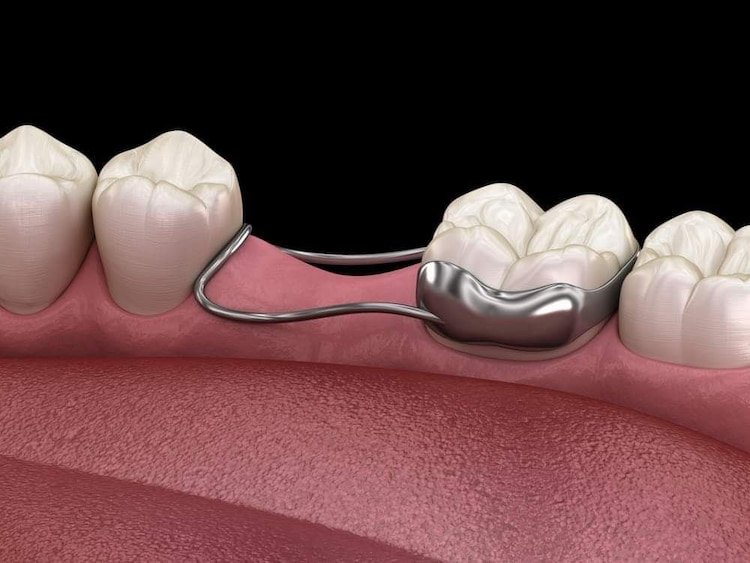
Band and Loop Space Maintainer
This fixed device includes a metal band that wraps around a nearby tooth, with a small loop that holds the empty space. It is most often used when a single baby tooth is lost.
Removable Space Maintainer
This appliance can be removed for cleaning and functions similarly to a retainer. It holds the space for the adult tooth to come in, but requires your child to wear it consistently for it to work well.
Distal Shoe Space Maintainer
This special type of space maintainer is used when a baby tooth is lost before the adult molar has erupted. It guides the new tooth into the correct position and sits slightly under the gums, which is why the dentist needs to monitor it closely.
Dental Space Maintainer Procedure
Placing a dental space maintainer is a relatively simple procedure that usually takes one or two visits. The dentist will begin by examining your child’s mouth and may take an X-ray to assess the situation. If a space maintainer is recommended, the dentist will take an impression or mold of your child’s teeth to create a custom-fit device. For fixed types like a band and loop, the dentist fits a metal band around a nearby tooth and attaches a small loop to keep the space open. The device is then securely cemented in place to stay until the permanent tooth is ready to come in.

If your child needs a removable space maintainer, the dentist will create a custom device designed to fit comfortably and be taken out for cleaning. The process typically takes one or two visits, depending on the child’s needs and the speed at which the appliance is manufactured. Placing the device is generally comfortable, although your child may experience mild pressure during the impression or fitting process. The dentist will explain how to care for the space maintainer and let you know when to return for follow-up check-ups to monitor your child’s dental development.
How to Clean a Space Maintainer?
Keeping a space maintainer clean is important for preventing plaque buildup, tooth decay, and gum irritation. Here are some tips to help care for it properly:
- Brush your child’s teeth twice a day with a soft-bristle toothbrush, using light pressure. Pay extra attention to the area around the space maintainer.
- Use fluoride toothpaste to help strengthen enamel and protect against cavities. For children under six, use only a pea-sized amount.
- If your child has a fixed space maintainer, help them floss around it once a day to remove food and plaque.
- For removable space maintainers, take them out daily and clean them with a soft toothbrush and mild soap. Be sure to rinse thoroughly and never use hot water, as it can damage the appliance.
- Avoid sticky or hard foods such as gum, caramel, and popcorn. These can dislodge or break the space maintainer.
- Schedule regular check-ups with your pediatric dentist to make sure the device is clean, fits properly, and is still doing its job.
Read More: Prevent Tooth Decay in Kids with Fluoride Therapy
Foods to Avoid with a Dental Spacer
When your child has a dental space maintainer (also called a dental spacer), it’s important to protect it from damage. Certain foods can loosen the spacer, break it, or get stuck in it, which can mean extra dental visits for repair. Avoiding these foods helps the spacer stay in place so adult teeth can grow in properly.
| Food Type | Examples | Why to Avoid |
|---|---|---|
| Sticky Foods | Gum, caramel, taffy, gummy candy | Can pull on the spacer and loosen it |
| Hard Foods | Nuts, popcorn, ice, hard candy | Can break or damage the spacer |
| Chewy Foods | Bagels, tough bread, dried fruits | Put pressure on the spacer and teeth |
Read More: Foods You Shouldn’t Eat After a Dental Crown
Early Orthodontic Care for Children in North York
Not sure if your child needs a space maintainer or early orthodontic support? Book a consultation at Smile Avenue Dentistry in North York. Our dentists will examine your child’s teeth, explain what’s going on, and recommend the right type of space maintainer or early treatment if needed.
FAQs
-
Does a spacer hurt?
No, a dental spacer usually does not hurt. It may feel a little strange at first, but it should not cause pain. If your child feels pain, tell the dentist.
-
When Is a Space Maintainer Needed?
A space maintainer is needed when a child loses a baby tooth early. It keeps the space open, so adult teeth can grow in the right place.
-
How long should a spacer stay in the mouth?
A spacer usually stays in the mouth until the adult tooth grows in. This can take several months to a few years, depending on the child’s age.
-
Why can milky teeth fall out prematurely?
Baby teeth can fall out early because of tooth decay, injury, or infection. Sometimes, dental problems make them weak and fall out before they should.
-
What happens if my child’s spacer falls out?
If the spacer falls out, call your dentist as soon as possible. The space might close, making it harder for the adult tooth to come in correctly.
-
What age is best for getting a space maintainer?
The best age for space maintainers isn’t about a specific number but rather when a child loses a baby tooth earlier than expected, usually between ages 6 and 12. If a permanent tooth isn’t ready to come in yet, a dentist may recommend a space maintainer to hold the gap open and guide proper growth.