

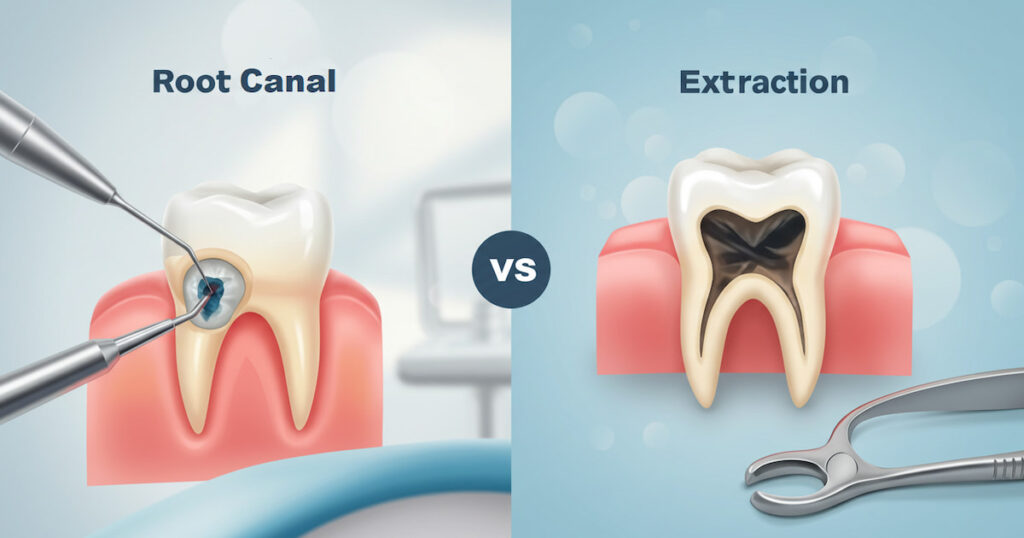
When a tooth is badly damaged or infected, dentists usually recommend one of two solutions: saving the tooth with a root canal treatment or removing it entirely with a tooth extraction. Deciding between these treatments can feel overwhelming. Should you keep your natural tooth, or is it better to remove it?
In this blog, we’ll walk you through tooth extraction vs root canal in detail, compare them across key factors like pain, cost, and long-term outcomes, and help you understand when each option might be the right choice. First, let’s take a deeper look at the procedures of these two treatments.
Tooth Extraction vs Root Canal: What Are the Procedures?
Before comparing root canal and extraction, it’s important to understand what each procedure involves. Both aim to treat severe tooth damage or infection, but they work in completely different ways.
What is a Root Canal?
A root canal treatment (also known as endodontic therapy) is a procedure designed to save a tooth that has a damaged or infected pulp. The pulp is the soft tissue inside your tooth that contains nerves and blood vessels.
During the procedure, the dentist or a professional endodontist removes the infected pulp, cleans and disinfects the inside of the tooth, and then seals it. A dental crown is usually placed on top to restore strength and function.
The main benefit of a root canal is that it allows you to keep your natural tooth, which is often healthier for your bite and jawbone in the long run.

What is a Tooth Extraction?
A tooth extraction is the removal of a tooth from its socket in the jawbone. Extractions are often recommended when a tooth is too damaged to be repaired, such as in severe decay, advanced gum disease, or traumatic injury.
While it is a more straightforward procedure than a root canal, extraction leaves a gap in the mouth. This gap may require a replacement with an implant, bridge, or denture to maintain chewing ability, facial structure, and oral health.
Tooth Extraction vs Root Canal: Comparing Key Factors
Now that you understand the basics, let’s compare these two procedures across the aspects patients worry about most: pain, recovery, cost, long-term effects, and success rates.
Pain and Recovery
Many people worry about pain when deciding on root canal vs extraction. Modern dentistry has advanced so much that both procedures are typically painless with anesthesia.
- Root canal recovery time: Most patients experience mild discomfort for a few days, which can be managed with over-the-counter pain relievers.
- Extraction recovery: Healing may take longer, especially for surgical extractions. Patients may deal with swelling, bleeding, and dietary restrictions for up to two weeks.
In short, root canal recovery is generally smoother and quicker than recovery from an extraction.
Cost: Initial vs Long-Term
At first glance, tooth extraction often seems cheaper. However, once you factor in the cost of replacing the missing tooth with a dental implant or bridge, the overall expense can exceed that of a root canal.
| Treatment | Initial Cost | Long-Term Cost |
| Root Canal | Higher upfront ($800-$2100 + filling) | Stable, long-lasting if cared for properly |
| Extraction | Lower upfront ($180-$700) | Higher in long-term (implant, bridge, or denture often required) |
All in all, if you’re searching for “root canal vs extraction cost,” remember to look at the long-term outcomes of both procedures, not just the initial price tag.
Impact on Jawbone and Adjacent Teeth
- Root canal: Preserves the natural tooth, keeping the jawbone stimulated and strong.
- Extraction: Once a tooth is removed, the jawbone in that area may shrink over time. Neighboring teeth can also shift into the gap, leading to bite problems.
Success Rates & Potential Complications
Root canals have a high success rate when performed properly, often lasting a lifetime with good care. However, there is a small risk of reinfection. On the other hand, extractions rarely fail but come with risks such as dry socket (Alveolar osteitis), infection, or bone loss if the space isn’t restored.

Pros and Cons of Root Canal and Tooth Extraction
Every treatment has benefits and drawbacks. Here’s a closer look at the pros and cons of each option so you can weigh them more effectively.
Pros and Cons of Root Canal
Root canal offers several benefits, making it a safe choice for many patients, such as:
- Saving your natural tooth
- Maintaining jawbone health
- Faster recovery
However, you should be prepared for the cons:
- Higher upfront cost
- Requiring crown placement
- Slight chance of reinfection
Pros And Cons of Extracrion
Pros of tooth extraction include:
- Lower initial cost
- Quick procedure
- Eliminating the risk of reinfection in that tooth
There are also some cons:
- Leading to bone loss without replacement
- Longer recovery
- Additional cost for implants/bridges
- The chance of affecting chewing and appearance
Rely on Our Help to Decide Between Root Canal and Extraction!
Our professional dentists and endodontists at Smile Avenue Dentistry guide you through every step so you can make the best choice for your smile. Book your appointment today!
When to Choose Root Canal vs Extraction
Deciding between the two depends on several factors:
- Tooth condition: If the tooth can be restored, root canal is usually the best option.
- Infection severity: In extreme cases where damage extends beyond repair, extraction may be unavoidable.
- Patient preference: Some people prefer extraction to avoid the risk of future problems.
- Long-term goals: Preserving natural teeth generally supports better oral health.
It’s worth mentioning that your overall dental condition is what determines the best treatment, meaning that if your tooth is too damaged to be saved, a tooth removal may be a better choice to restore your dental health. On the other hand, if there’s a chance of saving your natural tooth, a root canal can be the best option. A consultation with a dentist is the first step before deciding between these two treatments.

Conclusion
The choice between root canal and extraction isn’t always simple. Root canals generally provide better long-term outcomes, preserving your natural tooth and protecting jawbone health. Extractions, while quicker and cheaper upfront, often require additional care and investment later.
Every case is unique, so the best approach is to consult with your dentist, discuss your goals, and make a decision that fits both your oral health and lifestyle. At Smile Avenue Dentistry, our dentists in North York carefully assess your situation to recommend the treatment that will keep your smile healthy for years. Book a consultation today to discover your best option!
FAQ
-
Which is more painful: a root canal or an extraction?
Both are painless during the procedure with modern anesthesia, but recovery after extraction usually lasts longer and involves more discomfort.
-
Is a root canal more expensive than an extraction?
Yes, initially. However, once you include the cost of replacing an extracted tooth, a root canal can be more cost-effective. In the long run, preserving your natural tooth with a root canal often saves you money compared to the replacement costs after extraction.
-
Will the tooth need replacement after extraction?
Yes, in most cases, to avoid shifting teeth, bone loss, and bite issues. Replacement also helps restore chewing function and maintain the shape of your smile. Leaving the gap untreated can cause further dental problems down the line.
-
How long is the recovery for each?
Root canal recovery usually takes a few days. Extraction recovery may take 1–2 weeks. In some cases, surgical extractions can take even longer, especially if multiple teeth are involved or if there are healing complications.
-
What are the replacement options after tooth extraction?
Dental implants, bridges, and dentures are the most common solutions. Implants offer the most natural look and feel, while bridges and dentures can be suitable alternatives depending on budget and oral health. Your dentist can help you choose the option that best fits your needs.
We’d love to hear from you! Have you ever had to choose between a root canal and extraction? Share your experience in the comments below; we value your stories.