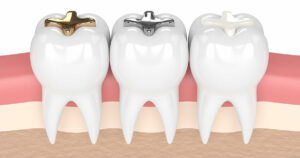

Tooth decay, chips, and cracks are common problems that almost everyone experiences at some point in life. Fortunately, dental fillings are one of the most reliable solutions for restoring damaged teeth and protecting them from further harm. However, not all dental fillings are the same.
The dental filling material you choose affects how natural your smile looks, how long the restoration lasts, and even how safe it is for your health. In this guide, we’ll break down the types of dental fillings, their pros and cons, and what you need to know before deciding which option is right for you.
Common Types of Dental Filling Materials
The choice of material matters not only for how your filling looks but also how it functions. Fillings can be divided into two broad categories:
- Indirect fillings: These are made in a dental lab or using CAD/CAM technology, then bonded to the tooth. Examples include inlays and onlays or porcelain restorations. Indirect fillings are more durable and precise but typically more expensive.
- Direct fillings: These are placed directly into the cavity in a single dental visit, like amalgam, composite resin, and glass ionomer.
Now let’s explore the most common options in modern dentistry.
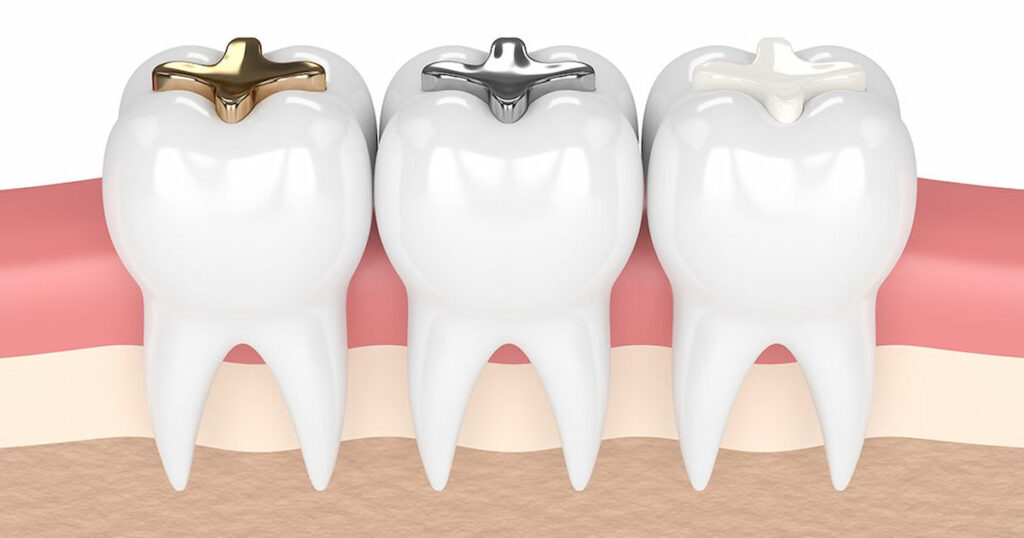
1. Amalgam Fillings
Amalgam fillings, often referred to as “silver fillings,” are made of a blend of mercury, silver, tin, and copper. They have been used for over 150 years because of their strength and affordability. This dental filling material is best for back teeth, where strength is more important than appearance.

2. Porcelain / Ceramic Fillings
Porcelain fillings, also known as ceramic fillings, are custom-made in a lab or using CEREC or CAD-CAM technology. These fillings are highly durable and resistant to staining; therefore, they are very expensive.
3. Composite Resin Fillings
Composite resin fillings are tooth-colored materials made of acrylic resin mixed with powdered glass. They blend seamlessly with natural teeth. However, they are less durable than amalgam (about 5-10 years lifespan).
Porcelain vs Composite Resin: While porcelain wins in strength and longevity, composite is a more budget-friendly option, while offering acceptable aesthetics and tooth preservation.
Now that you’re learning about the differences between porcelain and composite resin fillings, it’s a good idea to learn how these materials differ for dental veneers: Composite vs Porcelain Veneers: Key Differences Explained
4. Glass Ionomer Fillings
Made from acrylic and glass powder, glass lonomer fillings are often used in children or for fillings below the gumline. These fillings release fluoride, which helps protect teeth from further decay.
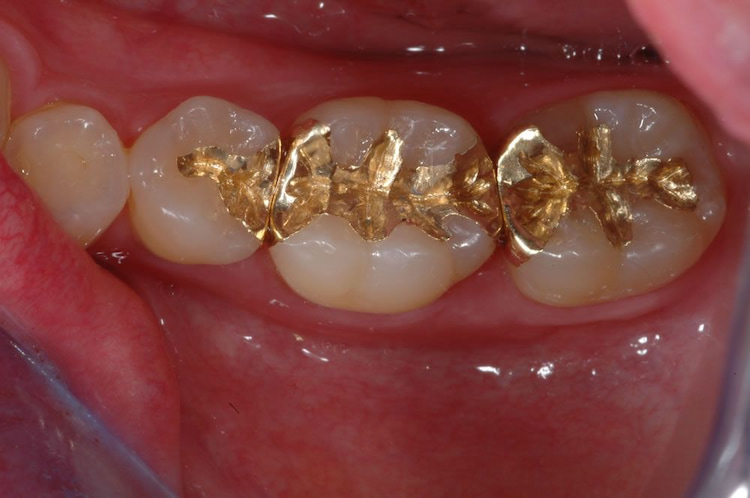
5. Gold Fillings
This type of filling is considered the most durable option in dentistry. They can last 20 years or more and are biocompatible and highly resistant to corrosion. However, they’re very expensive and have a noticeable metallic appearance.
Pros and Cons of Different Types of Dental Fillings
In the table below, you can check each filling material’s pros and cons, along with whether they’re direct or indirect.
| Type of Filling | Direct or Indirect | Pros | Cons |
| Amalgam (Silver) | Direct | Strong and durable, affordable, good for back teeth | Noticeable metallic color, contains mercury, may expand/contract with temperature |
| Composite Resin | Direct | Tooth-colored and natural-looking, bonds to tooth structure, and preserves more enamel | Shorter lifespan, more expensive than amalgam, may stain over time |
| Glass Ionomer | Direct | Releases fluoride to protect against decay, biocompatible, good for kids, and small cavities | Weaker and less durable, not very aesthetic, limited to small restorations |
| Porcelain / Ceramic | Indirect | Excellent aesthetics, stain-resistant, durable | Expensive, usually requires lab work or CAD/CAM, can be brittle if not well supported |
| Gold | Indirect | Longest lasting, biocompatible, very durable, and gentle on opposing teeth | Very costly, highly visible metallic look, requires multiple visits unless CAD/CAM used |
| Inlays / Onlays | Indirect | Preserve more tooth structure, highly durable, custom-made for fit | Higher cost, requires more time or advanced technology like CEREC |
Advanced & Indirect Filling Options
While most cavities can be treated with direct fillings like amalgam or composite resin in a single visit, some cases require indirect restorations. These are fillings that are custom-made outside the mouth, either in a dental laboratory or using CAD/CAM technology in the clinic, and then bonded to the tooth.
Indirect fillings are stronger, more precise, and often more durable than direct fillings, making them a great choice for large cavities or teeth under heavy chewing forces.
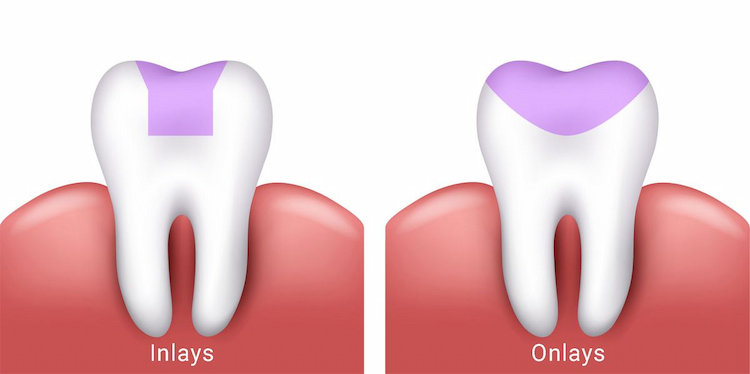
Inlays and Onlays
Inlays and onlays are often described as “partial crowns” because they restore part of a tooth without covering it completely. Inlays fit neatly inside the grooves of the tooth, between the cusps (the raised points). They are ideal for treating large cavities that are too big for a traditional filling but don’t require a full crown.
Onlays extend over one or more cusps of the tooth. They provide extra strength and protection when a tooth is weakened but can still be preserved.
Traditionally, inlays and onlays are made in a dental laboratory. The dentist takes an impression of your tooth after removing the decay, then places a temporary filling. At your second appointment, the custom restoration is cemented in place.
CAD/CAM & CEREC
Thanks to modern technology, you don’t always have to wait for a lab to make your indirect filling. With CAD/CAM (Computer-Aided Design/Computer-Aided Manufacturing) and CEREC machines, your dentist can design, mill, and place your porcelain inlay, onlay, or even a crown in just one appointment. Here’s how it works:
- After preparing the tooth, your dentist scans it using a digital camera (no messy impressions).
- The software designs a custom restoration to fit perfectly.
- A milling unit carves the restoration from a block of ceramic.
- The dentist bonds the piece to your tooth, and you leave with a permanent filling the same day.
Contact Us and Get the Right Type of Dental Filling!
At Smile Avenue Dentistry, we offer both traditional and advanced restoration methods. Whether you need a simple filling or a custom-made porcelain inlay, our team will help you choose the best option for lasting health and confidence in your smile.
How to Choose the Right Filling Material
Choosing the right filling isn’t just about what’s available; it’s about what works best for your mouth, lifestyle, and budget. Although your dentist should determine the right dental filling material, here are several factors to consider.
If the location matters:
- Front teeth: Aesthetic materials like composite or porcelain
- Back teeth: Stronger materials like amalgam or gold
- Heavy bite/grinding: Durable options like porcelain or gold
If the cost matters
- Amalgam: Most affordable
- Composite: Moderate
- Porcelain and gold: High-end, often not fully covered by insurance
If safety matters:
- Amalgam: Contains mercury, but studies show it’s generally safe.
- Allergies: Some people may react to metals or resin components.
- Biocompatibility: Porcelain and gold are usually the safest options for sensitive patients.
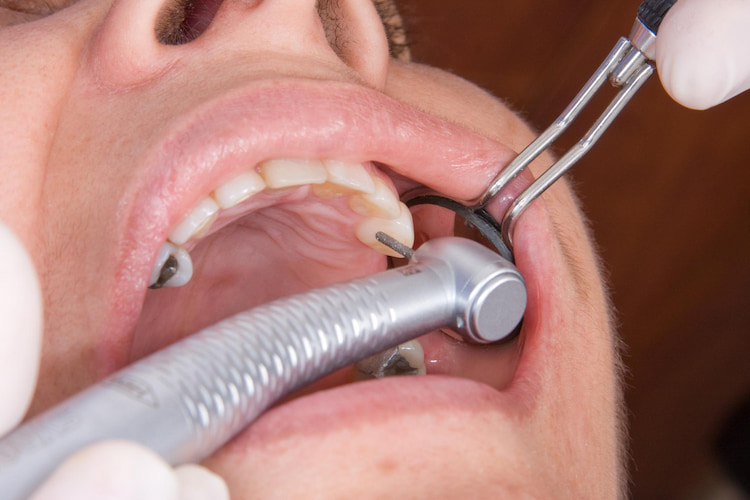
What to Expect During a Dental Filling Procedure
Getting a filling is usually simple, but knowing what to expect helps ease anxiety.
- Your dentist applies local anesthesia to ensure the tooth and surrounding area are completely pain-free during the procedure.
- The decayed or weakened portion of the tooth is carefully cleaned out using dental instruments.
- The dentist prepares the cavity space so the filling will fit securely and restore natural tooth function.
- Depending on the chosen material (amalgam, composite, glass ionomer, etc.), the dentist layers or molds it into the prepared cavity.
- The filling is sculpted to match your bite and the natural anatomy of the tooth.
- For materials like composite resin, a special curing light is used to harden the layers instantly.
- The restoration is polished to smooth rough edges, prevent staining, and make it feel comfortable in your mouth.
Discover Your Perfect Dental Filling Material Here
Choosing the right dental filling material is about balancing durability, appearance, safety, and cost. Whether you opt for tried-and-true amalgam fillings, natural-looking composite resin, fluoride-releasing glass ionomer, high-end porcelain fillings, or long-lasting gold restorations, each option has unique advantages. At Smile Avenue Dentistry, we help patients find the filling type that best matches their needs, lifestyle, and smile goals.
If you’re unsure which filling material is best for you, schedule an appointment with our team today. Our professional dentist North York will explain your options clearly and recommend the most suitable treatment for your dental health.
FAQ
-
What is the most durable filling material?
Gold fillings are the most durable, often lasting more than 20 years. They are a great choice for patients who prioritize strength and longevity over aesthetics.
-
Do tooth-colored fillings look natural?
Yes, composite and porcelain fillings closely match natural enamel. Most people won’t even notice you have a filling, especially on front teeth.
-
Is amalgam safe?
While it contains mercury, major dental associations consider it safe for most patients. If you have concerns, your dentist can recommend alternative materials.
-
How long do fillings last?
Depending on the material, fillings last between 5 and 20 years. Proper oral hygiene and regular dental checkups can extend their lifespan.
-
Does insurance cover different types of fillings?
Most insurance plans cover basic fillings like amalgam and sometimes composite. Higher-end options like porcelain or gold may only be partially covered, leaving you with out-of-pocket costs.
Which filling material would you personally choose: durable gold or natural-looking composite? Share your thoughts in the comments below!