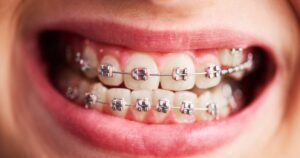

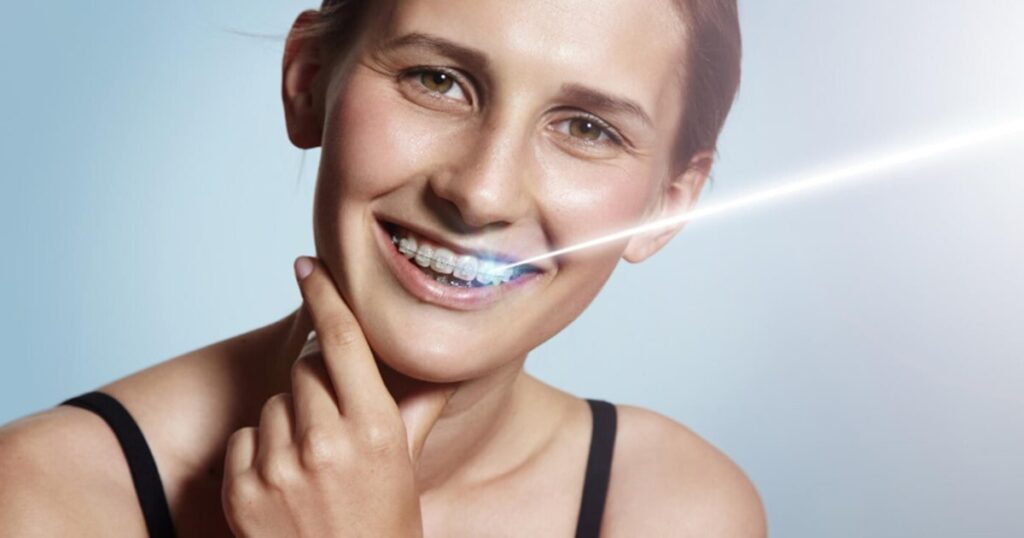
After orthodontic treatment is completed, you are probably looking forward to a neat and beautiful smile. However, you may notice slight changes in the color of your teeth after the brackets are removed. This is completely normal and usually results from conditions that develop during treatment and become more noticeable once the brackets are gone.
The appearance of your teeth plays a major role in the attractiveness of your smile. For this reason, many people want whiter teeth after orthodontics. Fortunately, there are several safe and effective methods for teeth whitening after braces.
Reasons for Tooth Discoloration After Orthodontics
Once orthodontic treatment is finished and brackets are removed, tooth discoloration may occur for several common reasons:
- Plaque and bacteria accumulation: Certain areas of the teeth are harder to clean during orthodontic treatment, allowing plaque and bacteria to build up and weaken the enamel.
- Diet: Frequent consumption of colored foods and beverages such as coffee, tea, soda, chocolate, and candy can stain teeth over time.
- Tobacco use: Smoking or using tobacco products causes nicotine deposits that lead to yellow or brown discoloration.
- Bracket size and material: Larger brackets trap more food particles and are more difficult to clean. In some cases, the coating of brackets may leave slight discoloration on the enamel.
Read more: “Most Popular Cosmetic Dental Procedures: How to Fix Your Smile”
Methods for Whitening Teeth After Orthodontics
After braces are removed, the following whitening options can be considered:
Whitening Products (OTC)
These include whitening toothpastes, strips, and pens available without a prescription. While convenient, these products are generally less effective and provide temporary results. They are usually not recommended immediately after brace removal.
Ready to Brighten Your Smile After Orthodontics?
Here at Smile Avenue Dentistry, we provide professional teeth whitening, braces, and clear aligners to help you achieve a confident, healthy smile. Our experienced orthodontists in North York will guide you through safe and effective whitening options tailored to your needs.
Are you wondering how you can whiten front teeth fillings? We will talk about some safe options to improve appearance.
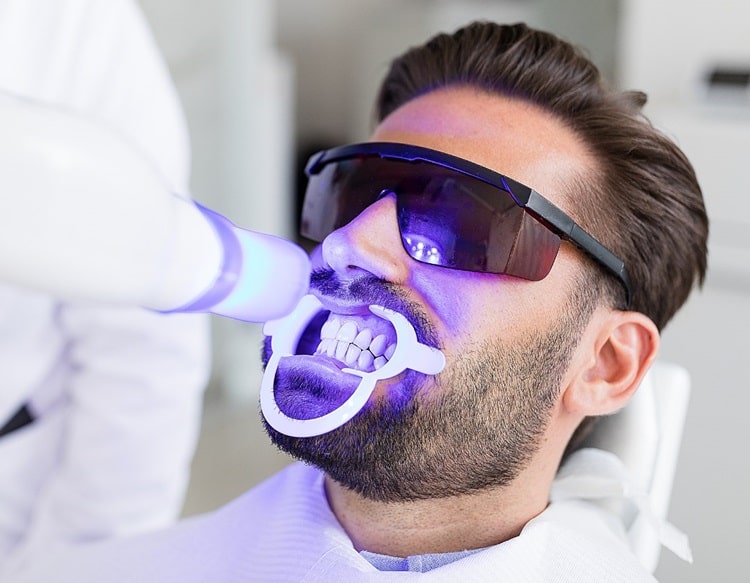
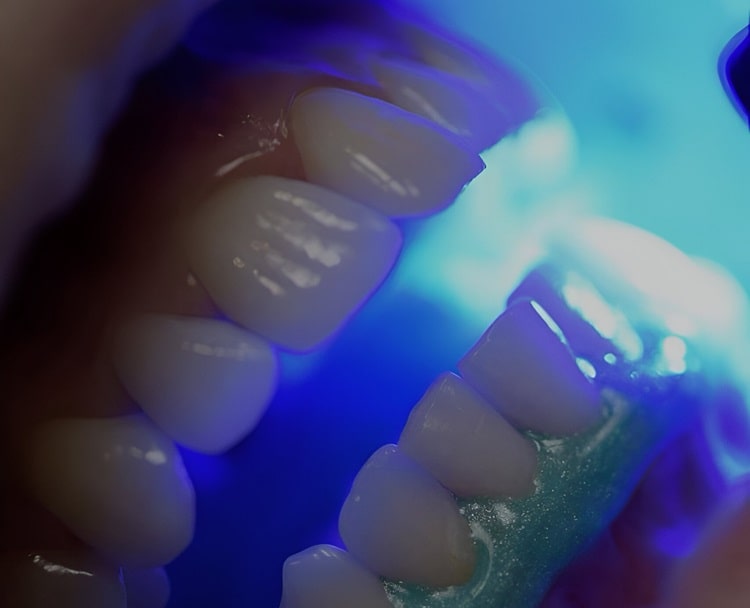
Professional In-Office Bleaching
In this method, the dentist protects the gums and applies high-strength peroxide gels to the teeth. Often, one session is enough to significantly whiten teeth, with results lasting several months or even over a year.
Laminates and Composites
For this approach, the dentist applies a thin layer of composite or ceramic laminate to the tooth surface, usually with minimal or no enamel grinding. This method improves tooth color, shape, and size, and is suitable for more severe discoloration.
Best Time to Whiten Teeth After Orthodontics
After bracket removal, teeth may be temporarily sensitive. Dentists generally recommend waiting at least one month, and preferably 3 to 6 months, before starting whitening treatments. This allows the enamel to strengthen and the gums to heal, resulting in better and longer-lasting outcomes. If discoloration is mild, whitening may begin a few weeks after treatment, but only after consulting a dentist.
Care After Teeth Whitening
Mild sensitivity to hot and cold is normal for a few days after whitening and usually resolves on its own. The following care tips help maintain whitening results:
- Maintain oral & dental hygiene: Brush twice daily, floss once a day, and use mouthwash as needed to reduce plaque and staining.
- Avoid colored foods and drinks: Limit tea, coffee, dark beverages, sauces, and colored fruit juices. Rinse your mouth with water after consumption and brush after a short delay.
- Quit smoking: Smoking and hookah use cause persistent tooth discoloration. If cessation is not possible, rinse your mouth with water immediately after use.
- Regular dental visits: Schedule dental checkups every two to three months for cleaning, polishing, and oral health evaluation.
- Repeat bleaching when needed: Whitening is not permanent. Touch-up treatments every 6 to 12 months may be necessary, depending on lifestyle and discoloration severity.
If you want to learn more about composite vs porcelain veneers, visit the link to learn more about their key differences.
Who Should Not Undergo Teeth Whitening?
Teeth whitening is not recommended for individuals under 18, pregnant or breastfeeding women, or those with untreated dental issues such as deep cavities or active gum disease. These problems should be addressed first, followed by whitening only with a dentist’s approval.
Don’t know how to prepare for your child’s first dental visit? These steps help you create a positive experience for your kids.
Book Your Teeth Whitening Consultation Today
Teeth whitening after orthodontics can greatly enhance the final appearance of your smile. Choosing the right method under dental supervision and following proper aftercare are essential for optimal results. With good oral hygiene, reduced intake of staining foods, and periodic whitening maintenance, you can enjoy a bright and healthy smile for years. If you’re looking for orthodontists in North York, Smile Avenue Dentistry offers braces and clear aligners to align your teeth and improve your oral health.
FAQ
1. Can teeth whitening after orthodontics damage tooth enamel?
When performed correctly under a dentist’s supervision, whitening does not harm tooth enamel. Improper or repeated use of non-standard products can weaken enamel.
2. Is bleaching possible while wearing retainers?
If the retainer is removable, bleaching is possible as long as the retainer is taken out during treatment. Bleaching is usually not recommended with fixed retainers.
3. Why do some white spots not disappear after bleaching?
These spots are often caused by enamel demineralization rather than surface stains. Treatments such as resin infiltration or composite bonding are usually more effective.
4. Do all teeth whiten evenly after orthodontics?
No. Teeth with previous restorations or enamel damage may respond differently to bleaching, and additional treatments may be needed to achieve uniform color.