

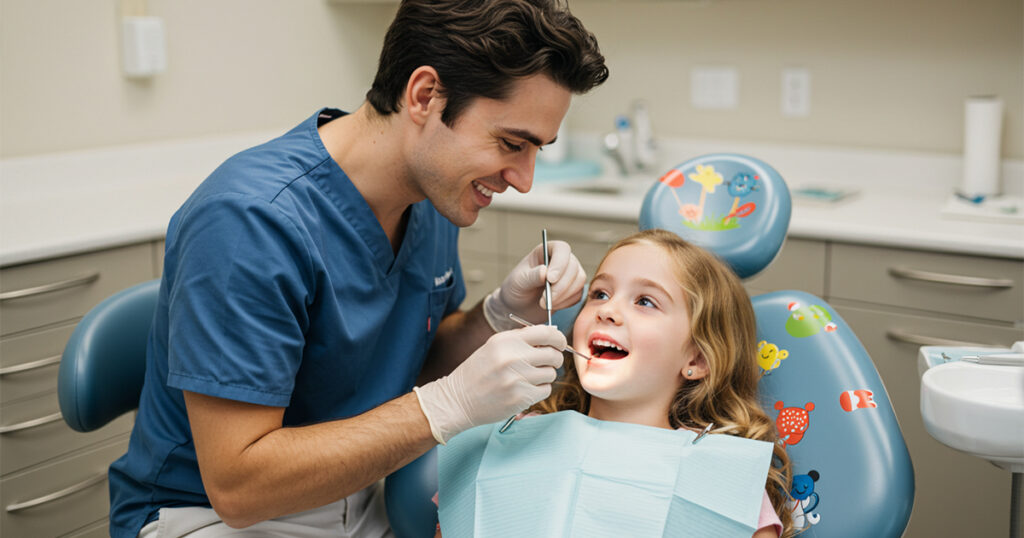
Pediatric dental procedures are designed to keep children’s smiles healthy while making each visit comfortable. Pediatric dentists are specially trained to ease children’s anxiety and provide treatments that focus on prevention and early care. Each common pediatric dental procedure helps protect enamel, prevent cavities, and manage minor issues before they become bigger concerns. In the following section, we’ll explore the most common options and explain how each one supports long-term oral health for kids.
What Are Pediatric Dental Procedures?
A pediatric dentist is a dental specialist who has undergone specialized training to understand the psychology of children. The goal is to assess the dental health of children and identify any oral issues. Therefore, pediatric dental procedures encompass a range of treatments and services designed to address the unique oral health needs of children, with a strong focus on building good habits and proper dental hygiene from an early age.
These treatments generally fall into four categories: preventive dental treatments, restorative procedures, orthodontic and developmental procedures, and emergency care. Let’s move ahead and take a closer look at some of the most common pediatric dental procedures.
Check out our blog on “Common Dental Problems in Children and How to Prevent Them” for practical ways to keep your child’s smile healthy.
Most Common Pediatric Dental Procedures
Here, we’ll explore eight practical and common pediatric dental procedure in this field to provide you with the necessary information about children’s dental care.
Regular Dental Exams and Cleanings
Regular dental checkups & cleanings are the cornerstone of preventive pediatric dental care. It’s recommended to schedule the first dental checkup for children on their first birthday. Then, follow-up routine checkups are suggested every six months.
During dental exams, the pediatric dentist will check for various oral issues such as cavities and gum disease. Additionally, jaw and teeth development will be monitored, and X-rays will be used to assess conditions beneath the surface of the gums.
Professionally cleaning teeth and giving oral care advice to parents are also parts of this common pediatric dental procedure.
A child’s first dental visit sets the stage for future care; learn how in “How to Prepare Your Child for Their First Trip to the Dentist.”
Fluoride Treatments for Strengthening Teeth
Fluoride plays a crucial role in strengthening children’s tooth enamel, so applying fluoride to teeth is considered a pediatric treatment, too. This way, your kid’s teeth will better resist decay.
Fluoride is available in various forms, including gels, foams, and varnishes. The dentist will assess the situation and use the best option for the procedure.
This quick and painless treatment is particularly important for children, as their teeth are still in the development phase and are more susceptible to cavities.
Dental Sealants to Prevent Cavities
Back teeth are in danger of trapping food particles and bacteria. Dental sealants are thin coatings that are designed to cover molars, also known as back teeth, and prevent decay and cavities.
During a Pulpotomy, the pediatric dentist removes the infected portion of the tooth’s crown, without touching the healthy root canals. Following that, the disinfected area will be covered with a medicated material in order to keep the pulp healthy. Finally, the tooth will be sealed with a filling or stainless steel for further protection.
In fact, we use a protective barrier (dental sealants) to seal out plaque and acid effectively. This procedure is also quick and painless, and can last for years if maintained properly.
Book an Appointment Now
Don’t let your child struggle with dental pain. Contact us at Smile Avenue Dentistry today to book an appointment and let our pediatric dentists care for your child’s oral health.
Tooth-Colored Fillings for Cavities
This method is also called a composite filling and is a very common restorative dental procedure for pediatric patients. Our dentists use this treatment to repair teeth affected by cavities.
In this procedure, first, the dentist removes the decayed portion and then fills the void with tooth-colored, durable composite resin.
Pulpotomy (Baby Root Canal) for Infected Teeth
Teeth that are damaged by infected pulps, which is a common disease in children, can be treated by Pulpotomy (or baby root canal). A pulp is a living tissue inside the tooth with nerves and blood vessels. Its infection is painful, and the primary goal of this procedure is to relieve pain. So, this is considered a restorative treatment.
Space Maintainers for Missing Teeth
In some cases, a baby tooth may fall out earlier, due to decay or injury. In such situations, dentists use space maintainers to ensure the permanent teeth have enough space to grow in the future. If not appropriately addressed, surrounding teeth can shift into the empty space, causing overcrowding and other misalignment issues.
Simply put, this procedure aims to keep the empty space wide open until the eruption of the permanent tooth.
For a smoother teething journey, read “Baby Teething: When Does It Begin & Common Symptoms“.
Tooth Extractions for Severe Decay or Crowding
Similar to adults, children may also require tooth removal in cases of serious injuries or severe decay. Additionally, overcrowding is another common reason for tooth extraction in kids.
The pediatric dentist should administer this treatment with extra care, since any minor mistake can cause pain and panic in children. Therefore, special tools and techniques, specifically designed for children, are used to loosen the damaged tooth and then remove it. All these steps are performed after the mouth is properly numbed.
If a baby tooth is removed, the dentist may use space maintainers to prevent the surrounding teeth from growing sideways and causing misalignment issues.

Early Orthodontic Evaluation and Treatment
This is a developmental procedure for correcting dental issues in children aged 7 years and above. Early orthodontics aims to address serious problems with jaw growth and tooth development before they become challenging issues.
In addition to the preventive nature of this treatment, early orthodontic procedures enable dentists to guide the growth of teeth, ensuring all permanent teeth develop correctly.
Now that you’re familiar with common pediatric procedures, let’s discuss the reasons that justify the importance of pediatric dental care.
Importance of Pediatric Dental Care
Since oral health is so critical, pediatric dental care has a direct impact on the overall well-being of children. Common pediatric dental procedures go beyond the health of baby teeth and play a pivotal role in forming positive habits necessary for a lifetime of good oral hygiene.
Our experience and statistics have proven he following benefits of specialized pediatric dental treatments:
- Preventing cavities and diseases
- Effectively monitoring oral development
- Building positive habits
Get the truth behind children’s oral health in “Pediatric Dental Care Myths vs. Facts: Setting the Record Straight“.
Final Thoughts
To help your children avoid dental issues and establish a foundation for positive oral habits, pediatric dentistry and common pediatric dental procedures play a crucial role. In this blog, we’ve examined eight regular procedures and how they can contribute to children’s oral health.
At Smile Avenue, we know how to provide your kids with a positive experience while taking care of their teeth. Book an appointment today with the best dentist near me in North York to give your child a healthy, beautiful smile that lasts.
FAQs
What are the most common dental procedures for children?
The most common pediatric dental procedures are: regular exams and cleanings, fluoride treatments, dental sealants, tooth-colored fillings, pulpotomy (baby root canal), space maintainers, tooth extractions, and early orthodontic treatment.
At what age should my child have their first dental visit?
Children should have their first dental visit by age one. This early checkup allows the pediatric dentist to examine the teeth and gums, detect any early signs of problems, and guide parents on proper oral care. After that, routine checkups are recommended every six months to monitor growth, prevent cavities, and build healthy dental habits.
Are dental X-rays safe for children?
Yes, dental X-rays are safe for children. They use very low radiation with protective measures like lead aprons. X-rays are only taken when necessary to spot hidden dental issues.
What is a dental sealant, and does my child need it?
A dental sealant is a thin protective coating applied to the back teeth (molars) to prevent cavities. It seals grooves where food and bacteria can get trapped. Most children benefit from sealants, especially if they’re prone to decay.
How do fluoride treatments help protect my child’s teeth?
Fluoride treatments strengthen tooth enamel, making it more resistant to decay. They help repair early signs of weakened enamel before cavities form. This is especially important for children since their teeth are still developing.
What happens during a pediatric dental cleaning?
During a pediatric dental cleaning, the dentist removes plaque and tartar, polishes the teeth, checks for cavities, and gives tips for better oral care.
When do children typically need orthodontic evaluation?
Children usually need their first orthodontic evaluation around age 7. At this age, permanent teeth are starting to come in, making it easier for dentists to detect issues like misalignment, crowding, or bite problems early. Early evaluation allows for timely treatment and helps guide proper tooth and jaw development.
How are cavities in baby teeth treated?
Cavities in baby teeth are usually treated with tooth-colored fillings made of durable composite resin. If decay reaches the pulp, a pulpotomy (baby root canal) may be done to save the tooth. In severe cases, the dentist may recommend tooth extraction with space maintainers if needed.
We’d love to hear about your experiences with pediatric dentistry. What procedures do you think are the most necessary for keeping children’s teeth healthy? Did your child’s dentist create a positive experience at the clinic? Share your thoughts in the comments below.