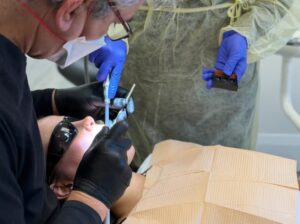


So, can veneers be removed or replaced? Yes, they can, though the exact method depends on the type of veneer, how much enamel was removed, and the health of the natural tooth. Many patients choose replacement when they are unhappy with the look of their veneers or when dental issues appear underneath. If you are exploring professional options, our Dental Veneers services in North York can provide solutions tailored to your needs. In this post, we will explain when veneers may need to be removed, how the process works, and what alternatives are available.
Understanding Veneer Removal and Replacement
Yes, but certain things need to be taken into consideration. In most cases, to place conventional veneers – such as porcelain veneers – the dentist usually shaves off some of the tooth’s enamel. In this case, the enamel that is shaved off is not going to return. So, if you remove the veneer, then typically you will have to replace it with a new veneer or some other restoration treatment to protect against tooth decay.
For this reason, we recommend that you leave the placement of the veneer to a dentist who can place the composite on it without manipulating the tooth structure. Also, choose veneers that are less invasive. For example, composite resins and no-prep / ultra-thin, such as Lumineers, require minimal shaving of the tooth enamel and can be easily removed or replaced.
✔️ Read more: ” Composite vs Porcelain Veneers: Key Differences Explained “
When Veneers Might Need to Be Removed or Replaced
For several reasons, a patient may want to remove dental veneers. The list of reasons may include the following.
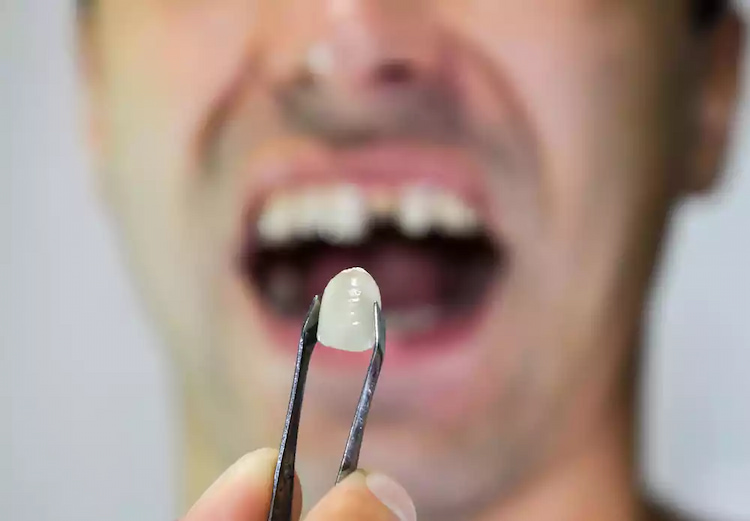
Need for reshaping
After dental veneers, some patients may become dissatisfied with the aesthetics of their teeth. They can even complain that the veneer is the reason for the lowering of the overall beauty of their teeth.
Need for dental services
Sometimes, dental veneers gradually cover a dental problem beneath the tooth that causes tooth decay, discoloration, or sensitivity. To treat these dental issues, it is necessary first to remove the dental veneers.
Composite breakage
Dental veneers may become damaged, worn out over time, or accidentally. In these situations, broken veneers should be taken off and new ones or other dental solutions should be put in their place.
Staining or dulling of veneers
Veneers are the reason for the attractiveness of your smile; however, they are not completely sealed from the intrusion of harmful substances, such as cigarette smoke and caffeine, and they can get discolored after a long time of usage. This is one more reason for removing composites.
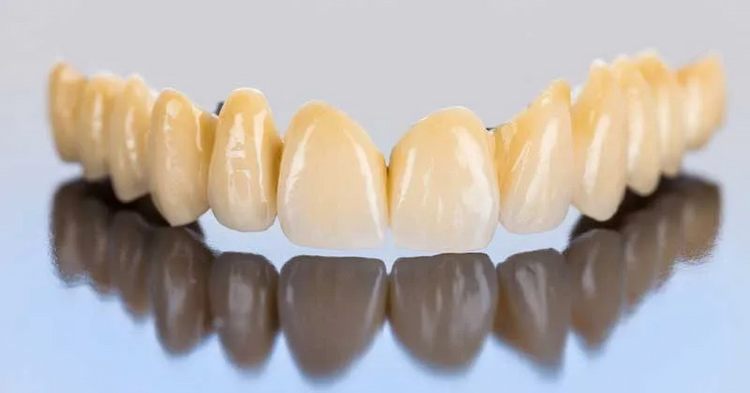
✔️ IF you decided to replace your Veneers, check out our blog on “Ultimate Guide to Common Types of Cosmetic Dentistry to find the best Cosmetic options!
Step-by-Step Process for Removing Veneers
Veneer removal is a delicate and specialized process, and each case may be different, but the general steps are as follows.
1. Examination and Imaging
The dentist will examine your mouth and veneers, taking X-rays or close-up photos to see what is underneath the veneer (decay, root canals, etc.). This step will determine how the veneer will be removed.
2. Treatment Planning
If not much enamel has been removed, you may be able to replace the veneer with a new one or even a laminate after the removal. If too much enamel has been lost or the tooth is weak, your dentist may recommend a crown or other restorative procedure.
3. Removing the Veneer Material
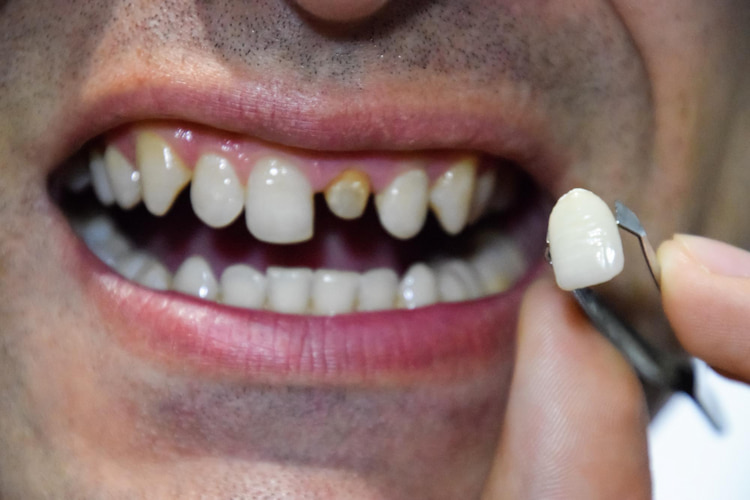
This step can vary greatly depending on the previous two steps and the type of veneer. The dentist may use a resin bur for composite veneers or a diamond bur if you have porcelain veneers. We’ll talk more about these tools in the next section.
4. Checking the health of the underlying layer
After extraction, the dentist will examine the remaining enamel and dentin of the tooth, treat any decay, and perform bonding or fillings if necessary. If the tooth is weak or sensitive, they will need to strengthen it before placing the new veneer.
5. Deciding on a replacement
Depending on the situation, the dentist will either make a new veneer or use temporary options for protection. If the tooth needs a crown, the treatment path will change.
4 Ways to Remove Composite Veneers from Teeth
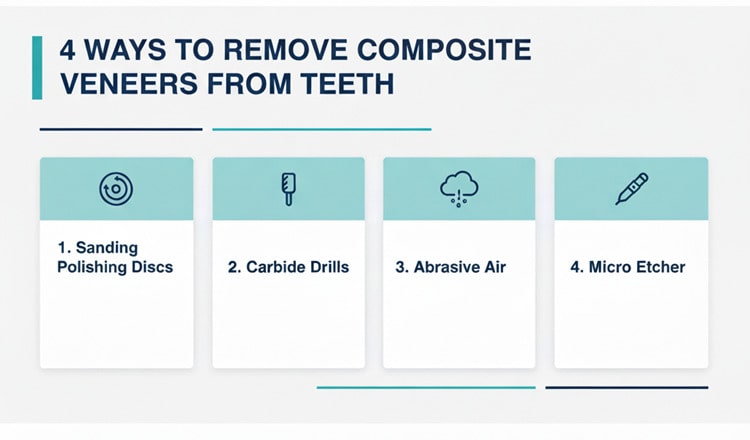
As mentioned in the previous section, depending on the type of veneer and the condition of your tooth, the dentist may use different tools and methods, including the following.
Sanding Polishing Discs
Using the abrasive surface of a sanding disc, the composite is removed from the tooth and polished. Polishers are flexible and reach all surfaces of the tooth, resulting in a uniform shine of the teeth.
Carbide Drills
These are high-speed drills. If the dental aesthetician uses a carbide drill to remove the composite veneer, the composite will be removed from the tooth faster. However, the carbide drill is not flexible, so it can leave some material on the teeth that can be removed with a sanding disc.
Abrasive Air
Most dental centers do not have abrasive air technology. With this technology, the dentist uses a small machine that sprays aluminum oxide particles onto the tooth, which helps to remove tooth decay in its early stages. This method is also used to remove dental crowns.
Micro Etcher
A micro etcher works like a sandpaper disc on the surface of the tooth and helps remove a specific amount of composite. Dentists use this device to remove composite from the surface of the tooth.
Thinking About Veneer Removal or Replacement?
At Smile Avenue Dentistry, our experienced team can guide you through safe veneer removal, replacement, or alternative treatments that protect your smile. Whether it’s time for a touch-up or a complete change, we’re here to help.
Side Effects of Composite Veneer Removal
Composite veneer removal is generally safe, but it depends to a large extent on the skill of the dentist and the choice of the appropriate procedure. In general, side effects from composite veneer removal occur when the tooth enamel structure has been altered during the placement of the veneer and is left without protection or alternative treatment after removal.
Read More: Veneers Costs and Pricing Guide 2025
For this reason, most dentists use temporary veneers while the patient is waiting for new veneers or other alternative treatments. However, you may still experience some normal side effects, such as temporary Sensitive Teeth or pain.
Suitable Alternatives to Dental Composites
Once the composite is removed, it is often required to use different methods for protection, especially if the enamel has been affected. A new composite is one of the simplest ways; however, if you are not satisfied with it or if there is decay, then it is probably not the right choice. Bonding is another close alternative to veneers, which is fabricated from the material of the color of the tooth, and thus is more suitable for the crack that has spread to the backside of the tooth.
In situations where the tooth is more damaged or has some loss of structure, a dental crown can be considered as the most durable and effective way for the complete restoration of the tooth and function. The truth is, it is the dentist who will give the best advice for your specific tooth, so rely on their know-how and support.
✔️If you want to know the costs of alternatives to veneers, check out this post: “A Complete Guide to Cosmetic Dentistry Cost”.
Tips to Protect Your Teeth During Removal or Replacement

To ensure a safe and low-risk procedure and a good end result, follow these tips:
- Always look for a licensed and experienced dentist. Be wary of unlicensed “veneer techs” on social media; reports have shown that unlicensed people have caused serious problems.
- If you are concerned about enamel removal, ask your dentist about “no-prep” or less invasive options. These options are not suitable for everyone, but in some cases, they can help preserve natural enamel better.
- If you grind your teeth at night, wear a night guard before getting your veneers replaced. Grinding can put over 250 pounds per square inch of pressure on composites!
- Be serious about oral hygiene and regular check-ups. Brushing, flossing, and regular checkups will help your veneers last longer and identify problems early.
- Treat your composite like real teeth. If you want your composites to last a long time, use your teeth for their primary function: chewing food, not opening bottles!
Take the Next Step Toward a Confident Smile
The answer to “can veneers be removed or replaced?” is yes, but the approach depends on your dental situation. Over time, wear, staining, or underlying decay may make removal necessary, and while composite veneers are easier to handle, porcelain requires more care.
When enamel is significantly affected, restorative options such as Dental Crowns & Bridges can provide stronger and longer-lasting results. Working with a skilled dentist ensures a healthier and more attractive smile.
FAQ
-
How many times can veneers be replaced?
Veneers can be replaced as many times as the tooth underneath is healthy, but with each replacement, more enamel might be removed, and you may wind up needing a crown.
-
Can veneers be removed and replaced?
Yes. Veneers can be removed and replaced, with composite being easier to remove but porcelain needing care to avoid damaging the underlying enamel.
-
How much does it cost to replace a veneer?
Cost varies depending on the type of veneer, where you live, and the condition of the tooth; porcelain is typically $900-$2,500 per tooth, and composite is less expensive.
-
What should I do when I hate my veneers?
Speak with your dentist first! Sometimes polishing or a minor adjustment can correct the problem, but if not, you can get a replacement!
Have you ever had your veneers removed or replaced? Share your experience or questions in the comments below. Your insights might help others considering the same procedure!